Global Manufacturing Hits $46.7 Trillion, Key Technologies Drive Resilient Machine Design
Key Highlights:
- Manufacturing output is projected to grow 1.9% globally in 2025, with notable resilience in the U.S., China, and emerging markets despite trade and policy headwinds.
- Innovations like Aetina’s Edge AI modules and Voyant Photonics’ LiDAR sensors are enhancing industrial automation, perception, and decision-making capabilities.
- Sustainable automation solutions from companies like Comau support regional visions such as Saudi Vision 2030, emphasizing greener, smarter manufacturing processes.

As 2025 draws to a close, the pace of innovation announcements in the form of press releases hitting Machine Design’s inboxes has accelerated alongside a manufacturing sector that continues to grow—albeit within a complex economic and policy landscape.
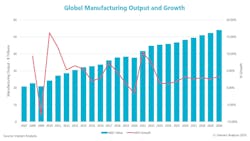
While Interact Analysis projects global manufacturing output to grow 1.9% in 2025, reaching $46.7 trillion, these gains come despite ongoing challenges, including supply chain disruptions, trade uncertainties and evolving public policy. With access to 7-8 months of production indicators for the majority of regions for 2025, Interact Analysis’ Manufacturing Industry Output Tracker shows a clear disparity has emerged between the market’s perceived downturn and its actual performance.
The report also shows that U.S. production output currently remains positive despite global trade wars, with predicted growth of between 2% and 3% for 2025. Other countries where the outlook remains good include Brazil, India, China and smaller APAC territories, which continue to show signs of expansion. While the largest economies in Europe have struggled in recent years, this is partially offset by growth in smaller, emerging countries. However, the European region as a whole is expected to register a -0.1% contraction in manufacturing output in 2025.
Adding to these complexities, recent discussions around cuts to the Manufacturing Extension Partnership (MEP) program, a key driver of technology adoption and competitiveness in U.S. manufacturing, have sparked concern across the industry, as reported in Machine Design’s sister brand IndustryWeek. The article highlights the important roles such programs play in accelerating innovation adoption at the plant floor, particularly for the small and medium enterprises that form the backbone of advanced manufacturing ecosystems.
At the same time, fluid power technologies—long a foundational element of industrial machinery—are showing renewed signs of growth and modernization in 2026. These are being driven by trends toward electrification, digital integration and system efficiency improvements, as reported by Power & Motion, another Machine Design sister brand. This resurgence draws attention to fluid power’s continued relevance in next-generation machine design, especially in demanding industrial and automotive applications.
Against this backdrop, a fresh wave of technology advances—from Aetina’s Edge AI Accelerators and Comau’s sustainable automation aligned with Saudi Vision 2030, to Carlo Gavazzi’s safety relays for next-gen HVAC, Voyant Photonics’ scalable LiDAR, and KHK USA’s precision steel gears, and more—offers actionable avenues for machine designers to drive resilience, efficiency and smart integration amidst uncertain macroeconomic and policy environments.
These developments are more than just headlines—they demonstrate how cutting-edge technical solutions are meeting the real-world demands of a manufacturing sector looking to not just survive but thrive.
Readers of Machine Design will want to understand and leverage these trends to create future-ready machinery that navigates today’s policy and market headwinds while capitalizing on steady growth opportunities globally.
Let’s take a closer look at some of next-gen technology that’s hitting the market.
Automation Aligns with Sustainability and Regional Visions
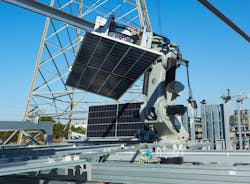
Comau offers a portfolio of collaborative robotics, automated assembly systems and battery energy storage solutions—all aligned with Saudi Vision 2030's goals for smarter greener industries. The company’s integrated hydrogen and renewable energy process technologies, combined with advanced intralogistics powered by Automha, allow them to deliver scalable, flexible automation for operational efficiency while reducing carbon footprints. Comau supports manufacturers tackling both local market growth and global sustainability mandates.
Safety and Compliance for Low GWP HVAC Systems
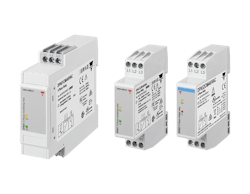
Responding to industry shifts toward climate-friendly refrigerants like R-32, R-1234yf and R-290, Carlo Gavazzi introduced the DPA series three-phase monitoring relays designed for spark-free operation to mitigate ignition risks. These relays continuously monitor phase loss and sequence meeting strict IEC/EN 60335-2-40 and UL 60335-2-40 standards for flammable refrigerant systems. The DPA series simplifies integration for OEMs developing compliant, safe and efficient HVAC equipment such as commercial heat pumps and chillers, accelerating time to market amid evolving regulatory landscapes.
FMCW LiDAR for Industrial Autonomy
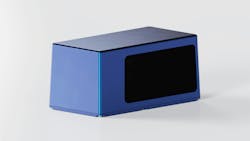
Voyant Photonics broadens its chip scale carbon FMCW LiDAR platform with new 32-line and 64-line sensors that extend the reach of their 128-line variant into more compact, cost-sensitive industrial systems. Utilizing silicon photonics to integrate beam steering and coherent detection, these sensors offer high-precision depth and velocity sensing with immunity to ambient light. Optimized for robotics, drones, ATVs and smart infrastructure, the scaled carbon line allows machine designers to embed advanced 4D perception for autonomous operation in diverse environments.
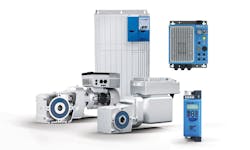
Modular Drives for Energy Efficiency and Precision Control
NORD Drives’ electronic control products, including Nordac variable frequency drives (VFDs) and motor starters, aim to deliver energy-efficient, scalable functionality with compatibility across their gear motor portfolio. With integrated multi-protocol Ethernet interfaces, safety features and operations for decentralized or control cabinet installation, these drives support modular autonomous production systems. The company offers washdown-resistant designs and expanded safety protocols with its configurable drive technology for a range of industrial applications.
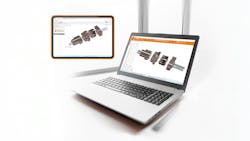
Digital Tools Streamline Electrical Integration
Weidmuller USA’s online configurator represents a leap forward in electrical cabinet design efficiency. This cloud-based, device-agnostic tool simplifies DIN rail planning, supports collaborative engineering workflows and provides assembly assist mode to guide production staff without requiring electrical expertise. Integrated ordering and fast delivery of fully assembled terminal strips reduce lead times and errors. The online configurator addresses skilled labor shortages and streamlines the design to production process, helping teams accelerate machine integration and commissioning.
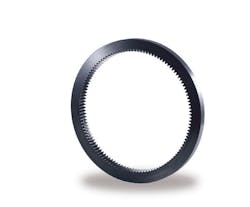
Precision Steel Internal Gears for Compact High-Torque Applications
KHK USA expanded its portfolio with steel internal (SI) gears fabricated from S45C carbon steel and produced to JIS N8 precision grade. These gears offer durability and smooth operation for planetary drives, robotics and industrial automation equipment requiring compact, high-torque power transmission. Available in a range of modules and tooth counts, KHK SI gears enable flexible gear train designs and straightforward integration with spur Gears of matching modules, supporting engineers and optimizing mechanical powertrain solutions for space and performance-constrained machinery.

Powering Edge AI with GPUs
Aetina Corporation’s latest CoreEdge MXM AI Accelerator Modules leverage NVIDIA’s RTX PRO Blackwell embedded GPUs to deliver up to three times the AI performance of previous generations in a compact MXM 3.1 industrial form factor. Designed to operate reliably in harsh environments, ranging from autonomous robotics to medical devices, these modules enable deployment of advanced AI models such as large language models (LLMs) and vision transformers at the edge. Offered with wide temperature tolerance (-40°C to 85°C), vibration-resistant mounting and dust/moisture protection, Aetina solutions address the growing need for on-site low latency AI intelligence with long-term product life cycle support.
About the Author
 Sharon Spielman
Sharon Spielman
Technical Editor, Machine Design
As Machine Design’s former technical editor, Sharon Spielman produced content for the brand’s focus audience—design and multidisciplinary engineers. Her beat included 3D printing/CAD; mechanical and motion systems, with an emphasis on pneumatics and linear motion; automation; robotics; and CNC machining.
Spielman has more than three decades of experience as a writer and editor for a range of B2B brands, including those that cover machine design; electrical design and manufacturing; interconnection technology; food and beverage manufacturing; process heating and cooling; finishing; and package converting.
Email: [email protected]
LinkedIn: @sharonspielman
Facebook: Machine Design
YouTube: @MachineDesign-EBM
Voice Your Opinion!
To join the conversation, and become an exclusive member of Machine Design, create an account today!
 Leaders Logo
Leaders relevant to this article: