Mastering Sensor Selection: Key Considerations as Design Constraints Tighten
Key Highlights
- Sensor selection now involves choosing data sources and edge compute environments, considering future analytics, digital twin integration and sustainability criteria.
- Wireless sensors with multi-year battery life, enabled by energy harvesting and ultra-low-power designs, are becoming the standard for energy-efficient applications.
- New tools like ST's SensorTile.box PRO facilitate rapid familiarization with advanced sensors, while customization options address unique environmental and application needs.

As machine design trends towards tighter space constraints, greater energy efficiency and more connectivity (Industry 4.0), the need to choose sensors wisely has never been more critical.
“The sensor selection landscape has fundamentally shifted from buying measurement devices to selecting data sources and edge compute environments for intelligent systems,” explains Praveen Sam, senior director of strategy and portfolio management at Honeywell. “This requires engineers to consider future analytics needs, digital twin integration and edge computing compatibility.”
Sam adds that sustainability is now front and center in sensor selection—not just energy consumption but end-of-life recyclability as well. “These are becoming mandatory selection criteria that create competitive advantages through lower total cost of ownership and alignment with corporate sustainability goals,” he notes. “We’ve reached a tipping point where wireless sensors with five-plus years’ battery life are now the default choice rather than the exception, driven by energy harvesting and ultra-low-power designs.”
Keeping Up with What’s Available
The good news is that sensor manufacturers are continually producing new sensors that offer better energy rating, compactness and more connectivity (to AI platforms, to harvest more asset performance feedback, etc.).
The bad news is that it’s a challenge to keep up with on the continual onslaught of product launches. As always, machine designers can visit a sensor firm’s website or do a search-and-selection at distributors like Mouser and DigiKey, but Ernesto Manuel Cantone, Americas product marketing manager at STMicroelectronics, points to new tools.
READ MORE: Emerging Sensors Driving Automation: LiDAR, Vision & 3D Trends
One is ST's hardware development kit, SensorTile.box PRO multi-sensors intelligent IoT node that’s paired with the STBLE Sensor Smartphone App. “It’s a very good tool to help with familiarization of new products,” says Cantone. “With a plug-and-play kit, one can monitor pressure, vibration and other measurements right from your phone and configure the various sensors with no coding to determine if they measure correctly the event you need.”
But Barry Brents, field application engineer at Littelfuse, reminds us that customization is always an option for unique situations. “Shrinking product architectures sometimes demand a sensor shape, lead frame or magnetic configuration not available off the shelf,” he says. “Also, high vibration, extreme temperatures, harsh chemicals or sterilization cycles often call for materials and architectures that must be tailored to the application.”
He adds that custom solutions can merge sensing with built-in diagnostics or digital communication, reducing PCB area, wiring complexity and total system cost. In addition, in long-lifecycle programs (industrial, defense, medical, automotive), custom devices ensure predictable performance and reduce risk of obsolescence.
General Pointers
In your sensor selection this year, Brents advises balancing power efficiency with signal stability. “Lower power is essential for battery-operated devices, wearables and autonomous systems, but it should not come at the cost of noisy thresholds or drift,” he explains. “Modern sensing technologies now offer nanoamp-level power and excellent stability, enabling both long life and consistent performance.”
Brents also stresses that sensor selection benefits from early evaluation of the actual operating environment. “As products shrink, sensors often sit closer to motors, magnets, heat sources and RF emissions,” he notes. “Understanding vibration, temperature swings, enclosure effects and magnetic interference up front will help ensure the final design performs as well as the prototype.”
READ MORE: Avoiding Obstacles: Ati’s Pallet Mover AMR Simplifies Automation on Existing Floors
Brian Coffey, industrial sensing market lead at ADI, also highlights this advice, suggesting that engineers validate real-world performance beyond the datasheet in sensor selection. “Evaluate sensors under actual operating conditions and consult with vendors to ensure suitability for your application,” he says. “Sensor selection is no longer about picking the cheapest option or the lowest noise spec. It’s about system-level resilience, predictive performance and vendor collaboration to ensure reliability.”
Coffey adds that it’s also misleading to compare sensors based on one-off specs like in-run bias instability. “Noise is just one error source,” he says. “System-level considerations matter, especially in complex machines where vibration signals introduce unmodeled errors. Axial misalignment, for example, can lead to pitch/roll/yaw drift proportional to time cubed.”
Connectivity Comes First
These experts all emphasize choosing sensors that incorporate data quality and diagnostics into their sensor architecture. Sensors increasingly feed into AI models, predictive maintenance systems and closed-loop control, says Brents, so choosing devices with higher linearity, better repeatability or integrated diagnostics can reduce firmware complexity and improve system intelligence.
Sam echoes this advice. “Engineers should future-proof with IoT-enabled intelligence instead of traditional standalone sensors which can process data locally, reducing cloud transmission costs and latency while enabling real-time decision-making for needs such as energy optimization,” he says. “Second, they should design for predictive connectivity, not just current measurement needs.”
Coffey has similar thoughts, advising engineers to consider connectivity and data integration early in the design process. “With AI-driven systems and predictive maintenance becoming standard, select sensors that support digital interfaces (e.g., IO-Link, Ethernet) and edge processing,” he says. “This reduces latency and simplifies integration with automation platforms.”
Common Mistakes
In addition to the previous advice, Cantone cautions engineers to consider skipping the selection of a consumer-grade sensor, as he often observed a specialized product is required instead.
In Sam’s view, a major selection misstep is inadequately considering the installation requirements for edge computing and cloud connectivity, particularly with signal integrity. He explains that this is especially true with compact designs where mounting orientation, cable routing and EMI interference are overlooked.
READ MORE: Selecting the Right Sensor: A Guide for R&D and Electronics Design Engineers
“Another error is failing to plan for sensor drift, monitoring and calibration requirements,” says Sam, “resulting in sensors that meet initial accuracy specifications but degrade beyond acceptable limits within months without accessible maintenance provisions.”
Brents advises engineers to avoid over-specifying, as selecting a sensor with far more resolution or sensitivity than the application requires can actually reduce robustness and increase noise sensitivity while adding unnecessary cost. He also advises not to assume a “catalog part” will behave the same in the final product.
Example Use Cases: Wiser Selection Matters
Following are use cases where engineers who aren’t aware of new options can avoid sub-optimum sensor selection.
1. Intensity of Movement
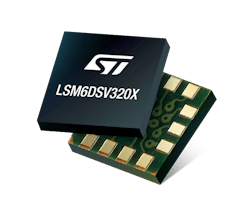
STMicroelectronics’ Cantone explains that where there is the need of a higher full scale, there are now ST sensors with dual acceleration full scale that enable much higher intensity of movement to be tracked. “We also offer various options of the same sensing technology in pin-to-pin compatible packages,” he explains. “Our accelerometers are standardized in 2×2 mm and inertial measurement units in 3×2.5 mm.”
2. Battery-Powered Medical, Wearable and IoT Devices
Littelfuse’s Brents notes that for position or proximity sensing, machine designers may reach for traditional Hall-effect switches, but next-generation magnetic sensing technologies can dramatically reduce current consumption while improving stability across temperature (a major advantage for ultra-efficient, always-on systems). “Engineers often default to reed switches or basic Hall-effect sensors because they’re familiar, not because they’re optimal,” he says. “Advances in magnetic, thermal and current sensing can deliver better performance, efficiency and lifetime in the same footprint.”
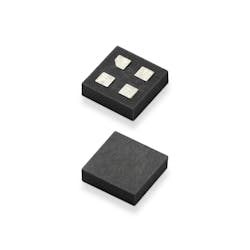
Littelfuse has just launched two omnipolar magnetic switches, the LF21173TMR and LF21177TMR, that combine Tunneling Magnetoresistance (TMR) and CMOS technologies in a compact LGA4 package, providing ultra-low power consumption, exceptional magnetic sensitivity, and fast response for compact, battery-powered systems.
3. Combined Data Collection
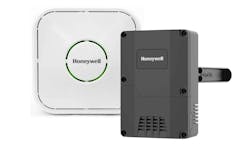
Honeywell’s Sam explains that moving from standalone sensors to IoT-enabled multi-parameter sensors with soft sensing capabilities can combine ambient air measurements with local processing. This helps in nailing down actual environmental conditions in which a machine will function. Honeywell’s C7355 air quality sensor monitors temperature, humidity, CO2, particulate matter and TVOC all in one wall-or duct-mountable module.
4. Replacing Accelerometers
Sam advises replacing traditional wired accelerometers with battery-powered wireless sensors featuring edge analytics that can run for more than five years while performing local edge analysis and anomaly detection.
5. Automated Guided Vehicle Navigation
ADI’s Coffey notes that for most AGV movement in straight lines, a simple IMU sensor may suffice, but sensors must address other movements such as sharp avoidance maneuvers, inclines, cold storage transitions, debris and load-induced rattling. The ROI of automation depends on staying autonomous, he notes, so a higher-grade IMU with robust calibration and vibration rejection is essential.
6. New Vision Systems
Today, many mobile robots use RGB cameras and 2D LiDAR systems, but Coffey explains that these vision systems are falling short as tasks become more complex. In these cases, 3D depth sensors provide more accurate environmental understanding and advanced capabilities.
7. New Sensor for Rotational Movement
In rotary actuators, the need for linear transducers in linear actuators, gear reduction mechanisms, or backup batteries can now be eliminated through sensors such as ADI’s ADMT4000, the industry’s first absolute multiturn position sensor in a single chip. It tracks up to 46 rotations without power or contact and delivers ±0.25° accuracy across the full range, says Coffey, which enables simplified mechanical design, reduced size and weight, lower solution cost and strong appeal for space-constrained applications like robotics.
About the Author
 Treena Hein
Treena Hein
Treena Hein is an award-winning science and technology writer with over 20 years’ experience.
Voice Your Opinion!
To join the conversation, and become an exclusive member of Machine Design, create an account today!
 Leaders Logo
Leaders relevant to this article: