Cannabis Packaging Embraces Automation
Key Highlights
- Regulatory fragmentation in the cannabis industry requires highly configurable automation systems to meet diverse state-by-state packaging standards.
- Custom-designed robotic tooling and modular systems enable gentle handling of fragile products and quick SKU changeovers, maximizing uptime.
- AI-driven vision systems improve defect detection and quality assurance, reducing manual inspection and errors.
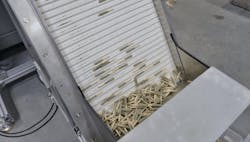
The cannabis packaging industry is evolving into a technology-driven sector, combining robotics, artificial intelligence (AI) and advanced vision systems to meet its unique production challenges. For machine design engineers, the cannabis market presents a fascinating case study of how regulatory fragmentation, fragile products and brand differentiation demand highly tailored and flexible automation solutions.
Jonathan Ballard, vice president of LeafyPack, a cannabis packaging automation manufacturer, offers an insider’s technical perspective on the innovations defining this emerging field.
Navigating Complex Regulatory and Product Challenges
Unlike conventional industries, cannabis packaging must adapt to a patchwork of state-by-state regulations. “It's not federally legal, and so each state has their own packaging regulations,” Ballard told Machine Design in an exclusive interview. “For example, in some states you can have a clear bag window, others require fully opaque, child-resistant packaging or specific recycled content percentages.”
This lack of standardization complicates automation design, Ballard said. For instance, an automation line qualified for Illinois may not suit Maryland's requirements, forcing manufacturers to engineer multiple variants or highly configurable systems. Achieving consistent brand integrity across such divergent packaging landscapes demands customizable solutions at every step.
Moreover, cannabis products themselves introduce delicate handling issues not common in other industries. “Pre-rolls are very unique,” Ballard notes. “They require child-resistant doob tubes or clamshells, and the product inside is fragile.” Unlike cigarettes, pre-rolls vary in shape, moisture and texture, requiring end-of-arm tooling that carefully grips without damage.
READ MORE: Precision Engineering for Automating Cannabis Manufacturing
Engineering Innovations and Robotic Tooling, System Design
LeafyPack builds on established robotic platforms such as ABB, Kawasaki and Omron, but masters the tooling integration critical to delicate operation themselves. Their engineers custom-design suction cups engineered to gently pick up multiple pre rolls simultaneously without slipping or clamping too hard.
“We’ve engineered the gripper so that as it picks up one roll, it drops a finger to avoid collision, lifts the next and repeats—allowing five at a time to be handled in precise patterns despite their cone shapes,” he said. This precise manipulation mimics human dexterity, leveraging programmable finger sequencing combined with vacuum suction optimized for the lightweight, fragile product.
Handling diverse and uniquely branded packaging shapes—from sachets shaped like flamingos to rigid jars resembling Mason jars—further demands modular tooling solutions with quick servo changeovers. “Clients don't want every SKU to look the same,” Ballard said. “Our servo-controlled changeover tooling lets operators switch between pouch shapes quickly, preserving brand identity while maximizing production uptime.”
Compactness is another constraint. Due to tight regulatory zoning and fire codes, cannabis facilities often have extremely limited floor space. LeafyPack’s Spyder pick-and-place robot exemplifies this compact engineering ethos, operating within a roughly 7 × 6 ft. footprint while integrating pre-roll feeding, vision inspection and packaging placement into tins, tubes or jars.
READ MORE: Precision Motion Engineering in Cannabis Manufacturing
Advanced Vision Systems and Modular Automation
Vision systems serve as electronic eyes for quality assurance, trained using extensive datasets to recognize subtle defects. “We trained the vision AI by showing it thousands of images of bent or damaged pre-rolls vs. perfect ones,” Ballard said. “Over time, it learns to detect defects autonomously, moving beyond rigid algorithms.”
Multi-camera setups verify fill levels and seal integrity on flow-wrapped items, addressing the difficulty of detecting clear products inside transparent pouches. Integrating AI-powered vision with robotic pick-and-place and labeling automates production checks previously reliant on manual inspection, helping to reduce errors and losses, Ballard said.
Cannabis operators often face high capital cost and regulatory taxation, which limits automation investment. LeafyPack’s modular system architecture supports phased adoption. “Clients can start with standalone components—like weighers or labelers—which are easy to integrate later into fuller lines,” Ballard said. “Our machines readily interface with popular third-party scales or counters, respecting customer preferences.
This modularity protects cash flow while enabling scalable upgrades as businesses grow, reflecting a “Lego block” approach to line building.
Predictive Maintenance, Operator-Centric Design, Safety
To maximize uptime in facilities often staffed by less-experienced operators, LeafyPack machines employ embedded sensors and vision monitoring to track wear patterns and predict maintenance needs. “Our systems report how frequently components like suction cups or solenoids require replacement, helping minimize unexpected downtime,” Ballard explained.
Some clients opt out of full IoT cloud connectivity for security, Ballard said, but internal automated alerts empower operators to perform proactive upkeep. Preventive maintenance programs often serve dual roles as ongoing operator training, compensating for workforce turnover.
READ MORE: Robotics Safety: Unveiling the 2025 ISO 10218 Update
When it comes to operator safety, end-of line-operations often use cobots with safety cages and hit-detection sensors able to stop motion on touch. Ballard says there are long-term health benefits of working with cobots. “Safety isn’t just avoiding short-term injury. Automating heavy box building or pallet stacking keeps workers healthier, reduces repetitive strain and supports career longevity.”
READ MORE: Robotics Safety:Unveiling the 2025 ISO 10218 Update
Visual sensors and physical barriers combined with standard personal protective equipment (PPE), making cannabis automation safer and more attractive to operators, according to Ballard.
What’s Next for LeafyPack?
Ballard says traceability is a flagship focus for the future. “Pre-rolls are a top seller but expensive. Knowing exactly how many are produced, sold or lost is vital. Detailed tracking and reporting capabilities are integral to our next systems,” he said.
Emerging packaging formats like stick packs and sachets—requiring advanced vision-guided inspection and filling—will drive ongoing technical innovation. Deep learning AI integration and expanded IoT capabilities aim to deliver smarter, more autonomous lines.
About the Author
 Sharon Spielman
Sharon Spielman
Technical Editor, Machine Design
As Machine Design’s former technical editor, Sharon Spielman produced content for the brand’s focus audience—design and multidisciplinary engineers. Her beat included 3D printing/CAD; mechanical and motion systems, with an emphasis on pneumatics and linear motion; automation; robotics; and CNC machining.
Spielman has more than three decades of experience as a writer and editor for a range of B2B brands, including those that cover machine design; electrical design and manufacturing; interconnection technology; food and beverage manufacturing; process heating and cooling; finishing; and package converting.
Email: [email protected]
LinkedIn: @sharonspielman
Facebook: Machine Design
YouTube: @MachineDesign-EBM
Voice Your Opinion!
To join the conversation, and become an exclusive member of Machine Design, create an account today!
 Leaders Logo
Leaders relevant to this article: