How to Fix the Weakest Link in Generator Reliability: Fresh Thinking in Starting System Design
What You’ll Learn:
- Why starting batteries are the No.1 cause of generator failure and how traditional DC starting systems create hidden reliability risks.
- How continuous float charging shortens the life of common flooded lead-acid batteries and leads to sudden, catastrophic failure..
- When to use a system-level engineering approach to improve generator reliability, installation and long-term performance.
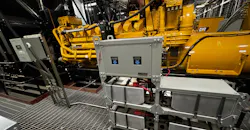
Reliability is an absolute priority for any critical backup system. For emergency generators that ensure continuous power to hospitals and critical industries, it can be lifesaving.
What is the most common reason a critical generator fails to start?
Starting Systems Are the No. 1 Threat to Generator Reliability
While gensets have been improved and optimized over several decades, far less time has been spent engineering the DC systems that start and sustain them.
Typically, gensets are specified and commissioned at a system level, ensuring components work together to meet precise customer needs. The DC battery starting system, however, is an afterthought.
That same system-level engineering approach is now extending to engine starting systems. To understand what that means in practice, it helps to examine how starting systems are typically commissioned today and why those conventional methods can lead to generator failure when they are needed most.
The Root Problem: Ignoring System-Level Design
All parts of a system must be coordinated, integrated and work cohesively together to ensure reliability. But while engines are factory-tested by the manufacturer, starting systems are often specified separately by third parties and later field-assembled.
Batteries, chargers, racks, disconnects and wiring are sourced from multiple vendors, with different timelines creating complicated systems, crowded generator enclosures and multiple failure points. This often puts the installer in a bind to get separate parts integrated in the field, under a deadline.
Each component is carefully chosen to meet its design specifications. However, when bought and installed as individual parts, the system may not operate as efficiently as expected.
And where does this problem most commonly surface? Batteries.
As the NFPA's (National Fire Protection Association) Brian O'Connor points out, “If the batteries in a diesel generator fail, then the entire system will not operate; in fact, battery failure is the most common cause of generator failure.”
Widely Used Batteries Weren’t Designed for Standby Genset Use
Conventional starting systems typically use a lead-acid flooded starting, lighting and ignition (SLI)—the same battery used in cars and motorcycles.
These batteries are designed to deliver short-duration bursts of current followed by rapid recharging from a vehicle's alternator. However, this is different from what is expected in standby applications that operate under a fundamentally different duty cycles. They can remain idle for months at a time, yet are expected to start instantly and reliably whenever power is lost.
Continuous Float Charging Shortens Flooded SLI Battery Lifespan
An engine starting battery cannot perform as intended unless it is fully charged. To ensure readiness, emergency and standby gensets are typically equipped with static battery chargers that maintain the battery at full charge. SLI batteries are continuously float charged to:
- Compensate for self-discharge so the battery can provide cranking power in emergencies.
- Supply power to DC-controlled genset switchgear and monitoring systems.
Field experience has shown that flooded lead-acid SLI batteries are not designed for continuous float charging. This operational condition can accelerate battery aging and reduce longterm reliability.
Why Flooded SLI Batteries Fail Suddenly in Starting Systems
Among the battery types used for generator engine starting, flooded lead-acid SLI batteries are the most common because of their low cost and widespread availability. However, in generator applications, these batteries typically last only half as long as they do in vehicles—about 2-3 years, compared with 5-6 years.
Genset operators know this and take preventative measures, typically replacing lead-acid SLI batteries every 2-3 years as required by NFPA-110 in highly critical applications.
Most drivers quickly recognize the telltale signs of a failing battery: a slight hesitation when starting the engine or a dashboard warning light. Engine cranking also becomes slower and weaker.
Continuous float charging, however, adds additional stress. Flooded lead-acid SLI batteries are made of numerous thin lead plates isolated by polyethylene separators and suspended in an electrolyte mix of sulphuric acid and water. In these hostile conditions, the polyethylene is already under stress. Float charging accelerates its deterioration, weakening the separators that isolate the battery’s thin lead plates.
One of the most common failure modes for flooded lead-acid SLI batteries under continuous float charge is separator failure. With electrodes no longer effectively separated, the battery is at risk of short-circuiting. When failure arrives, it arrives fast, often without warning.
The reason the same type of battery lasts about twice as long in your car is simple: In automotive applications, it is charged intermittently rather than kept on continuous float charge.
Should All Battery Types Be Intermittently Charged?
This limitation does not apply to all engine-starting batteries. It is specific to flooded lead-acid SLI batteries.
For example, sealed valve-regulated lead-acid (VRLA) starting batteries designed for generator applications are intended to be continuously float charged with temperature compensation. When maintained according to manufacturer recommended settings, they do not exhibit the same deterioration associated with continuous float charging.
Although VRLA batteries are available for engine starting, they are less common and more expensive in the larger sizes used in common generator engines.
Other battery chemistries used for generator engine starting include nickel-cadmium (NiCd) and nickel-zinc (NiZn), each with their own specific charging requirements.
Systems Engineering Shifts Focus to the Entire Genset
A system-level engineering approach shifts the focus from individual components to how the overall design cohesively operates within the wider backup power system. This includes the end-to-end customer experience, from specification through commissioning and installation, operation and maintenance.
In this framework, batteries are viewed as one part of an integrated DC starting system. How they are charged and operate is just as important as their unit specifications.
Modern, high-performance battery chemistries are reliable and designed to deliver high cranking power. They are also better able to withstand continuous float charging, with less risk of the catastrophic end-of-life failure common with flooded lead-acid SLI batteries. Their higher power density also makes them lighter, smaller and more efficient for operators.
High-performance batteries can address many of the shortcomings of flooded lead-acid SLI batteries. But from a systems-engineering perspective, they are only one part of the overall solution.
Paired with high-performance batteries, a new generation of intelligent battery chargers is helping improve engine-starting system reliability. By continuously monitoring real-time operating conditions, these chargers can optimize charging performance in the same conditions that backup generators must perform without fail.
Figure 1 shows an engine-starting system that integrates a high-power NiZn battery with an onboard battery charger using a proprietary temperature compensated charge algorithm. The integrated charger is optimized for the NiZn battery's charging requirements, helping ensure the battery is ready to start when needed.
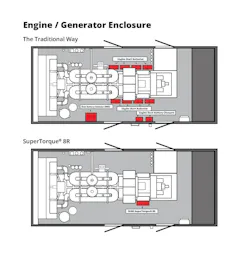
Because the battery and charger are factory integrated and optimized, it is backed by a 10-year warranty, which is an assurance that is difficult to achieve with disparate components assembled on-site. It is also up to 90% smaller than comparable lead-acid starting systems.
Factory-Integrated Systems Improve Commissioning and Delivery
By shifting from multi-vendor, field-assembled architectures to a whole-system approach, starting systems can be specified and commissioned as a complete package. This mirrors how gensets themselves are typically specified and commissioned.
With this model, DC starting systems are engineered to meet application requirements and assembled by a single manufacturer. Batteries, chargers, alternators, redundancy configurations and DC connections are designed and tested as a coordinated system rather than as separate components sources from multiple suppliers (Figure 2).
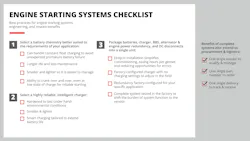
The completed system is delivered factory assembled and tested, with charging parameters configured for the specific battery technology and application. This approach simplifies installation and reduces the integration challenges that can arise when components are selected and commissioned independently.
Consolidating system design and supply through a single source can also reduce coordination challenges across vendors, procurement schedules and logistics. In standby power applications, reliability depends not only on how well a system performs in operation, but also on whether the right components are available, compatible and ready when they are needed.
Conclusion
When backup generators fail, the consequences can be costly and, in critical sectors, even life-threatening. While starting system batteries are often identified as the primary point of failure, the starting system environment is frequently the underlying cause of shortened battery life and sudden catastrophic failure.
New charging technologies and fresh thinking about how systems are designed and commissioned are helping to minimize these risks. By approaching starting systems as an integrated whole rather than as a collection of individual components, systems engineering is improving generator reliability and helping ensure starting systems perform when they matter most.
Reference
Stored Energy Systems Whitepaper: HELIX – Charging Technology Increases Genset Starting Battery Life & Cuts Risk of Catastrophic Battery Failure
About the Author
 Olen Scott
Olen Scott
CCO, Stored Energy Systems
Olen Scott is the Chief Commercial Officer of Colorado-based Stored Energy Systems LLC (SENS). SENS is an industry leading supplier of non-stop DC power systems, high reliability power electronics and distributed energy products that are essential to critical infrastructure function.
Scott has more than 30 years of experience leading successful high growth businesses, including global roles with teams spanning North and South America, EMEA and Asia. His experience includes both early stage privately held businesses and Fortune 50 companies.
At SENS his teams are responsible for all sales, marketing, channels and customer success.
Scott received his Finance degree from American University.
Voice Your Opinion!
To join the conversation, and become an exclusive member of Machine Design, create an account today!
 Leaders Logo
Leaders relevant to this article: