Why AI Still Needs Engineering Judgment
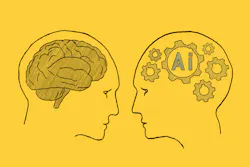
Generative AI is rapidly becoming part of everyday engineering workflows. Many of the engineers I work with now use AI in some capacity on a regular basis, primarily for practical support and straightforward applications.
As AI capabilities continue to grow, many organizations are asking important questions like: What role does the engineer play as engineering workflows become AI assisted? What new risks emerge as AI’s capabilities and use cases expand?
As we tackle these questions, we must also consider how engineers can use AI responsibly and confidently. The focus should be on preserving engineering judgment and ensuring human expertise remains at the center as AI becomes more integrated into engineering workflows.
How Engineers are Using AI Today
In most engineering settings, AI is currently used as a search and research assistant. Engineers are turning to AI agents and chatbots to accelerate the initial research and exploration that goes into solving an engineering problem. In some cases, these tools may also have access to company-specific context and documentation. AI is essentially working like an advanced, optimized search engine tool.
Questions engineers might ask an AI assistant include: How do I machine this part? What tolerance is appropriate for this aspect of my project? What materials might work for this design?
The questions don’t usually go much deeper than that. Today’s engineers generally do not rely on AI assistants to make their most consequential engineering decisions. Instead, they are primarily using AI to accelerate research and exploration while supporting the work they already do.
AI Risks and Challenges
There are two main risks I’m seeing as AI becomes more widely used in engineering. The first is determining how much confidence engineers should place in the responses they receive from an AI tool.
Recently, I read a story about a hiker who became lost after relying on an AI-generated map that was completely inaccurate. The same trust problem applies in engineering.
While an AI response may sound authoritative, it still can be incomplete, outdated or wrong. The biggest risk comes when a recommendation begins to influence an engineering decision without appropriate review. Organizations need to establish a trust boundary between the AI-generated recommendations and the engineers responsible for validating them.
There also needs to be organizational consistency in how those boundaries are applied. Without governance, different teams can make fundamentally different decisions about when and how to trust AI. That inconsistency isn’t just inefficient; it can also create liability exposure.
The second risk is homogenization. When AI is consuming the same general content from different users, it may produce similar recommendations, procedures and design directions. To produce results that reflect how a particular company designs and builds its products, AI-supported work needs to incorporate company-specific processes, data and design knowledge. The challenge is ensuring AI does not simply provide a generic answer, but one grounded in the context that makes a company and its products unique.
Other risks worth paying attention to include using the wrong versions of data, inadequate traceability and insufficient validation.
Why Engineers Need to Approach AI Usage Differently
Engineering data is highly contextual, versioned and dependent on product maturity. The same product may have multiple versions, maturity states, released and unreleased configurations, proofs of concept and production records. That means AI tools need access to the appropriate data for the particular engineering task and engineers need to understand which data is relevant to the decision they are making.
In product development, several versions of the same data may all be valid, depending on what you’re analyzing or working on. For example, in the early design phase of a product, you might only be interested in a lower-maturity version of the object you are working with. The latest requirement, the latest proof of concept or proof of design may all refer to something that has not yet been released into production.
However, when you need to improve a product based on field issues, you may need to work with data from a different stage of maturity, including versions that are several iterations behind the latest design in your system. Engineering teams work across many different product development scenarios, each of which may require a different set or version of the data.
Engineering decisions also have tangible consequences because they ultimately shape real products. That makes it especially important that AI-assisted recommendations are based on the appropriate data and context for the engineering task at hand.
This is what makes context and traceability so important. It isn’t enough for the information AI uses to be technically correct. It needs to be the right data for the right need, at the right moment, with the ability to trace which information contributed to a recommendation.
5 Guardrails for Maintaining Engineering Judgment and Confidence with AI
For engineers to get usable results that meet company and industry standards while still introducing helpful efficiencies to their work, leaders need to establish practical AI governance guardrails. Here are five guidelines engineering organizations should consider.
1. Start with targeted use cases. AI is not a switch you can simply turn on. Simply introducing a new capability doesn’t mean your engineering department is going to perform better. When you decide to incorporate AI into your engineering processes and procedures, start by thinking about the targeted use cases that are most valuable to your business.
In particular, consider where the most time-consuming parts of your process can be optimized. Identify where it hurts and where AI can provide a meaningful improvement. Starting with a defined use case also makes it easier to determine what data, controls and human involvement that particular application requires.
2. Keep engineers in the loop. No matter how accurate or advanced an AI tool seems to be, engineers need to remain responsible for the important decisions that shape the product.
That doesn’t mean every small AI-assisted action requires a formal validation process. Engineers already work within design review and approval processes that focus attention on consequential decisions. AI should fit within those processes rather than circumvent them.
From a product lifecycle management (PLM) perspective, AI can suggest new relationships in a model, identify potential impacts, or even help write a test specification against a requirement. But when those recommendations contribute to meaningful engineering decisions, the engineer still needs to validate them and follow established company processes.
Engineers bring their own background, expertise and judgment to the process. AI can feed the process with insights and suggestions, but engineers need to retain final approval, including the ability to reject an AI recommendation when their expertise tells them it isn’t appropriate.
3. Make AI recommendations traceable. The AI tools you work with need to identify the sources and data used to generate recommendations. This enables engineers to understand what information contributed to an answer and, when necessary, return to the underlying source to verify it.
Traceability becomes even more important when an AI recommendation contributes to an engineering decision. Six months later, an organization should be able to understand that an engineer used a recommendation from an AI system, what data the system relied on and who ultimately made the decision.
That type of audit trail is already important in engineering, particularly in regulated industries. AI makes maintaining it even more important. As AI becomes part of engineering workflows, that traceability also helps preserve the integrity of the digital thread by maintaining a record of the data, recommendations and human decisions that shaped the product.
4. Use the right engineering data. Especially for company-specific use cases, AI needs access to the data and context that are relevant to the engineering task. Using company-specific data can also help address the homogenization risk discussed earlier by grounding AI recommendations in the processes and knowledge unique to the organization.
But providing AI with more data is not necessarily the answer. Product data has different versions, maturity states and relationships, and the appropriate information depends on the task. Organizations need to think deliberately about which data is made available to a particular AI use case and ensure engineers can understand the context behind it.
The goal is to bring the right data to the right AI application, rather than simply giving an AI tool access to a broad collection of documents and expecting it to reason correctly about the product.
5. Build engineering feedback into the AI workflow. Human involvement should do more than validate individual recommendations. When an engineer accepts, rejects or corrects an AI-generated recommendation, that feedback can also help improve the system and the quality of future outcomes.
That means organizations should think about feedback loops as part of their AI workflows. AI adoption isn’t a one-off action. As engineers work with the technology, their input should inform how those workflows evolve over time and help shape the governance around them.
When I look back at the past several decades (and even just the past few years), the engineering profession and its tools have changed dramatically. I think engineers should actually take comfort in this fact as AI continues its upward trajectory because even if the way they do their work changes, it doesn’t change the fact that engineers themselves are important to the work.
CAD, simulation and PLM all changed how engineers work without eliminating the need for engineering expertise. I firmly believe AI will be no different. Instead, I view AI as a tool to unlock different ways of doing things rather than a full-blown engineer replacement.
At the same time, adopting AI requires forethought and planning. The goal is not to avoid AI or adopt it indiscriminately. It is to put the right guardrails in place so AI can accelerate engineering work without replacing the judgment engineers bring to it.
About the Author
 Anthony Ponceot
Anthony Ponceot
Chief Architect, Aras
Anthony Ponceot is the Chief Architect at Aras, where he drives the company’s enterprise technical strategy, cloud infrastructure and low-code Product Lifecycle Management (PLM) solutions. With more than 15 years of experience deploying complex engineering software frameworks for major global enterprises, his current focus centers on advanced AI platform integration and expanding the data-continuity capabilities of the digital thread.
Voice Your Opinion!
To join the conversation, and become an exclusive member of Machine Design, create an account today!
 Leaders Logo
Leaders relevant to this article: