Why This Season’s Playtime Might Be Sparking Tomorrow’s Manufacturing Talent
Key Highlights
- Children naturally experiment with toys, learning about balance, force and motion without realizing it, fostering early engineering instincts.
- Modern toy design involves complex engineering processes, including geometry, stress analysis and manufacturability, to ensure safety and durability.
- Digital tools like Hexagon’s Geomagic Freeform enable designers to create toys that are both organic in appearance and mechanically sound, enhancing play experiences.
- Engineering decisions made during design—such as articulation, scaling and material selection—directly impact a child's interaction and learning with toys.

By Eleazer Kim-Carmeli and Kevin Atkins
Every year, as the holidays roll in and living rooms fill with wrapping paper, something else quietly fills the room too: curiosity. Long before classrooms reopen in January, children all over the country begin experimenting with physics, balance, materials, and motion, all without realizing they’re doing it.
The holiday season doesn’t just bring toys. It brings a wave of hands-on discovery that looks a whole lot like early engineering.
And at a time when U.S. manufacturers are heading into 2026 with nearly 450,000 open jobs, those moments of curiosity matter more than ever.
Where Holiday Play Becomes Problem-Solving
Watch a child on Christmas morning and you’ll see engineering instincts emerge almost instantly. A figure that won’t stand up becomes a lesson in center of gravity. A part that snaps into place becomes an exploration of fit, tolerance, and force. A hinge that rotates just right becomes an introduction to pivots and torque.
None of this feels like “learning.” But these tiny experiments are exactly where engineering intuition begins, and they depend on something easy to overlook: The toy has to be engineered well enough for a child to explore it.
Behind the Scenes: How Modern Toys Are Engineered for Discovery
Anyone who designs toys every day can tell you: these aren’t simple objects. They’re miniature mechanical systems that require the same attention to geometry, stability, articulation, stress, and manufacturability as many industrial components.
A licensed character must look right, move right, withstand real-world play, and be consistently manufacturable at scale. That blend of organic sculpting and engineering precision is why the Jakks Toys team uses a comprehensive design software, Hexagon’s Geomagic Freeform, which lets us design toys the way kids interact with them, organically, intuitively, and with real-world physics in mind.
These tools allow Jakks to:
- Sculpt expressive, accurate character forms
- Set rotational pivots and test articulation
- Validate wall thicknesses and structural integrity
- Maintain real-world measurements as we scale or reshape parts
- Ensure a design is manufacturable before it enters tooling
That balance between organic form and mechanical precision requires designers to use tools that let them sculpt like an artist but work with measurements like an engineer. A good holiday toy must look right, move right, and hold up under the very enthusiastic “testing” that happens in December.
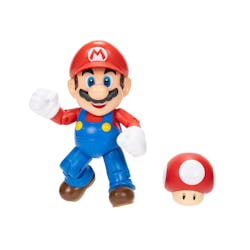
How Engineering Decisions Shape a Child's Experience
A child’s first reaction to a toy is often based on how it feels to interact with. That feeling comes from dozens of technical decisions we make long before the toy reaches a shelf.
Scaling isn’t simple. Resizing a character from 2” to 10” isn’t a matter of dragging a slider. Proportions shift. Strength changes. Details distort. In Freeform, designers can see real dimensions, thickness, and tolerances so the toy holds up in a child's hands, not just on a screen.
Articulation must account for real play. A joint has to rotate predictably and safely. Clearances must be tight enough for stability but smooth enough for play. Digital articulation testing helps anticipate failure points before they’re discovered the hard way on Christmas morning.
Durability is a learning tool. Let’s be honest, holiday play is the most aggressive form of product testing. Kids twist, bend, drop, and push toys far beyond their intended limits. Engineering durability isn’t just about safety; it keeps the learning going.
Manufacturability is non-negotiable. A design isn’t complete until it can be molded, assembled, and scaled reliably. Draft angles, mold flow, wall thickness, snap fits—every detail must align with real production constraints.
Essentially, these choices determine whether a child gets frustrated and puts the toy down or stays curious.

Why This Matters to the Future of Manufacturing
Manufacturers across the U.S. are asking how to inspire the next generation of engineers, designers, machinists, and technicians. But interest in building things almost never starts in a college classroom.
It starts much earlier.
A transforming toy sparks interest in mechanics. A well-balanced figure sparks interest in stability and structure. A durable molded part sparks interest in materials. A smooth, precise articulation sparks interest in mechanical design.
These sparks matter, especially as the industry faces a widening skills gap. The right toy, at the right moment, can introduce a child to engineering without a single instruction manual.
A Seasonal Spark for the Next Generation of Makers
As manufacturers look toward 2026 and plan for workforce shortages, automation, and greater production demands, December offers something unexpected but important: millions of children learning how things work simply by playing.
Behind every toy that “feels right” is the same engineering discipline found in any modern shop: accurate measurements, mechanical planning, materials thinking, and manufacturability built into the design from the start.
The toys unwrapped this holiday season aren’t just gifts. They’re invitations to explore, experiment, and imagine. They’re early sparks of the curiosity our industry needs.
And sometimes, engineering inspiration begins with a child, a quiet morning in December, and a well-designed toy.

Editor’s Note: Machine Design’s WISE (Workers in Science and Engineering) hub compiles our coverage of workplace issues affecting the engineering field, in addition to contributions from equity seeking groups and subject matter experts within various subdisciplines.
About the Authors
Eleazer Kim-Carmeli is director of 3D and sculpting at Jakks Pacific.
Kevin Atkins is the product manager for Geomagic Freeform at Hexagon Manufacturing Intelligence.