The End of File-Based ECAD-MCAD Collaboration
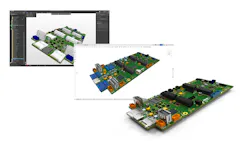
In an ideal workflow, ECAD and MCAD teams would always stay in real-time sync, as they design interconnected systems. In the real world, however, the workflows connecting those disciplines have, for decades, relied heavily on exported files, manual imports and disconnected revision management. Those processes created friction that made continuous collaboration difficult in practice.
Today, that model is beginning to change. Cloud-native engineering platforms are reshaping how electrical and mechanical teams work together by enabling continuously connected design data across disciplines.
The timing is critical. Today’s products are more connected, software-driven and complex than ever. Robotic systems combine electronics, sensors, embedded software and tightly constrained mechanical packaging, while medical and industrial products increasingly require close coordination between electrical, thermal and mechanical systems.
At the same time, engineering teams are under pressure to move faster. Development cycles are shorter, manufacturing timelines are tighter and teams are more distributed than ever. Organizations are expected to innovate more quickly while avoiding costly downstream rework.
Yet many ECAD-MCAD workflows still rely on manually exported files, email attachments and disconnected revision management. That creates friction exactly where modern engineering organizations need agility. Most product teams are familiar with the consequences:
- Connector clearance issues discovered late in development
- Mounting conflicts identified during prototyping
- Thermal constraints uncovered after PCB revisions are finalized
- Teams unknowingly working from outdated file versions
- Repeated review cycles caused by asynchronous updates
As products become more compact and electronically sophisticated, these inefficiencies become harder to absorb. The issue is no longer just communication between teams; it’s the workflow architecture itself. Traditional ECAD-MCAD collaboration was built around sequential engineering. Electrical teams completed layouts, exported files and passed them to mechanical teams for review. Feedback triggered another revision cycle, often requiring additional exports, rework and coordination.
That process worked when products were simpler and timelines moved more slowly. It breaks down when electrical and mechanical systems need to evolve simultaneously. Modern product development increasingly relies on concurrent engineering, in which disciplines collaborate continuously rather than through serial handoffs.
That’s why the industry is moving toward cloud-native product development. Cloud-native engineering environments create a shared source of truth where teams work from continuously connected design data instead of static exported files. Design changes become visible in real time, reducing revision lag and improving coordination across disciplines.
The shift mirrors what happened years ago in software development, where cloud collaboration and centralized version control replaced isolated local workflows because they enabled faster iteration and greater organizational agility.
Cloud-native workflows help teams:
- Reduce dependency on exported files and manual imports
- Improve revision visibility across disciplines
- Accelerate design reviews and iteration cycles
- Support distributed collaboration without version fragmentation
The impact goes beyond productivity. Earlier visibility into design changes helps organizations reduce manufacturing surprises, minimize prototyping delays and improve confidence before release. Engineering teams spend less time managing files and more time solving design problems.
One of the most important developments emerging from this shift is direct cloud-native ECAD-MCAD integration. Historically, even integrated workflows still relied heavily on exported files moving between separate systems. While useful, those approaches still carry many of the same synchronization and revision challenges. Modern cloud-native integrations are beginning to eliminate much of that friction entirely.
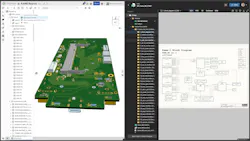
The direct integration between Altium 365 and Onshape represents an important example of this shift. Instead of relying on repetitive export and import cycles, PCB design data remains continuously connected between the electrical and mechanical design environments. Mechanical engineers can visualize current PCB information directly within Onshape while electrical teams continue working inside their native Altium workflows.
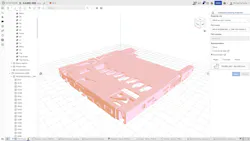
The collaboration is bidirectional. If a mechanical engineer adjusts a PCB mounting hole location, an enclosure constraint or a component placement requirement in Onshape, those changes are immediately visible to the electrical engineering team in Altium.
Electrical engineers can quickly understand what changed, evaluate the downstream impact on routing or layout constraints and respond before issues propagate further into development. Updates flow through a connected cloud-native environment rather than through disconnected file handoffs and delayed revision exchanges.
The next generation of products, from industrial robotics to AI-enabled hardware systems, will place even greater demands on engineering coordination. Electronics density is increasing. Thermal complexity is growing. Mechanical packaging constraints are tightening.
Disconnected workflows built around delayed synchronization are increasingly incompatible with the pace of modern product development. The future of engineering collaboration is therefore moving beyond standalone tools toward connected environments, where teams can stay attuned to the product from concept through release.
Engineering organizations are increasingly looking for connected environments where CAD, electronics development, product data management and manufacturing processes operate as part of a unified digital thread. This shift is not just about efficiency; it’s about helping organizations move faster, reducing costly rework and building better products in an increasingly competitive market.
Traditional file-based workflows are showing their limits as product development moves faster and becomes more distributed. The future belongs to connected, cloud-native engineering environments built for real-time collaboration, continuous visibility and faster iteration.
More content from Special Focus: CAD/CAM/CAE.
About the Author
 Darren Henry
Darren Henry
Senior Vice President, Onshape General Operations and Arena Marketing, PTC
Darren Henry is Senior Vice President of Onshape General Operations and Arena Marketing at PTC. With a BSME in mechanical engineering from the University of Florida and over 25 years of experience in design and manufacturing technologies, Henry leads Onshape’s Technical Services and Business Development Teams.
Voice Your Opinion!
To join the conversation, and become an exclusive member of Machine Design, create an account today!
 Leaders Logo
Leaders relevant to this article: