The Next Evolution of CAM: From Programming Parameters to Programming Motion
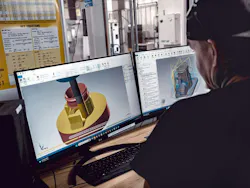
For decades, CNC programming has followed the same pattern. Programmers choose a machining strategy, work through pages of parameters, generate a toolpath, inspect the motion and go back into the settings to adjust and refine it.
Experienced programmers have become extremely skilled at working this way. They know where the controls live, which values influence a particular section of motion and how to manipulate the software to get the result they want. This workflow has produced some of the most sophisticated machined parts in the world.
But today, CAM technology is moving toward a different mode that allows programmers to work more directly with the motion itself.
The change is influenced by a combination of visual toolpath interaction, intelligent automation, AI-assisted workflows and faster simulation. Together, these technologies are beginning to reduce the distance between what a programmer wants the cutting tool to do and what the software requires to make it happen. As manufacturers face tighter pressure to create complex parts with fewer workers, the way people interact with CAM software is becoming part of the productivity equation.
From Configuring a Toolpath to Interacting with One
Experienced CNC programmers typically know what they want the cutter to do. They may want to change the way a tool approaches a feature, modify the motion in one region of a part, keep the cutter away from a particular surface or change tool orientation to improve access. The challenge is that conventional CAM workflows require the programmer to translate that machining intent back into software settings.
A programmer may see an area of a toolpath that needs to change, but instead of interacting directly with that motion, the next step is often to determine which parameter controls it, navigate back into the operation, change a value, regenerate the toolpath and inspect the result. If the motion still isn’t right, the process repeats or, worse, helper geometry needs to be created to influence results.
A more visual approach changes that relationship with constant calculation. Toolpath strategies now process in real time as parameters are input and the traditional adjust-regenerate-wait cycle begins to disappear. Change a stepover and see the toolpath react in real time or watch retract heights change as the clearance value is changed.
All this happens automatically providing real time feedback to the user. In addition, instead of treating the generated toolpath primarily as the output of a collection of parameters, programmers can interact with the motion itself with powerful direct editing tools. They can select an individual pass or region of a toolpath and trim, extend, move or delete motion; adjust feeds and speeds in a specific area; change leads or collision avoidance; and have the surrounding motion automatically relink with toolpath edits regenerating as changes are made.
Start with Automation, Then Apply Expertise
The change toward more visual programming is part of an industry evolving to automation-first CAM workflows.
Traditionally, sophisticated toolpath creation required programmers to make many decisions before they could see useful motion. They selected a strategy, defined the variables, generated the toolpath and then began refining it. It’s now becoming more common for software to use intelligent defaults and automation to create a credible starting point earlier in the process.
This changes where the programmer's expertise enters the workflow. Instead of spending time defining every element of an operation from scratch, the programmer can begin with useful motion and concentrate on the areas where experience and manufacturing knowledge matter most.
Manufacturing is too contextual for a one-size-fits-all approach. Someone programming an expensive aerospace component, a medical part or a difficult alloy still needs granular control over tolerances, linking motion, tool orientation, feeds, speeds and countless other variables.
The opportunity is to make that complexity available when it is needed, rather than requiring programmers to navigate all of it before useful motion can be created. Good automation should take care of predictable work while leaving the serious machining decisions to the programmer.
A More Fluid Approach to 3- and 5-Axis Machining
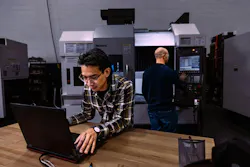
The value of that approach becomes even clearer as shops take on more complex multi-axis work. CAM software has historically separated 3-axis and 5-axis programming into distinct strategies and workflows. Interestingly, the part does not recognize those software boundaries.
A programmer may want conventional 3-axis cutting through most of an operation, then introduce 5-axis movement in one area to reach a feature, avoid interference or maintain a better tool orientation. Traditionally, that can mean leaving one strategy that has already been set up, creating and setting up a new strategy all because the type of motion needed has changed.
Newer workflow concepts, like switching from 3 axis to 5 axis, are beginning to make that transition more seamless, allowing 3- and 5-axis motion to coexist in the same strategy. Rather than asking which software strategy should be used next, the programmer can stay focused on how the tool should move around the part. That approach becomes more important as 5-axis machining moves into a wider range of shops. Programmers will need to move more easily between different types of motion without the software creating artificial boundaries between them.
Toolpath creation is only one place where programmers encounter friction. Even experienced programmers can lose time searching for commands, documentation or functionality they don’t frequently use.
Natural-language AI offers another way to reduce that friction. Rather than searching through menus or leaving the workflow to find an answer, programmers can now describe what they are trying to accomplish and get guidance in context.
This can help manufacturers transfer knowledge as experienced programmers retire and newer programmers take their place. AI can make technical and programming knowledge easier to access without replacing the judgment required to apply it. The goal is to shorten the time between having a question and getting the information needed to make that decision.
Shortening the Feedback Loop
The same principle applies to simulation. Traditionally, simulation has been treated as a validation stage where a programmer programs the part, then verifies that the resulting toolpath will run safely before sending it to the machine. As simulation becomes faster and more tightly connected to programming, it can become a more continuous source of feedback. In the future, the programmer can make a change, evaluate its effect and refine the motion while still actively programming the part.
This creates a tighter cycle between intent, action and feedback. As the industry evolves, programming, AI assistance, simulation, tooling and machining data are becoming parts of a connected workflow rather than isolated steps. The productivity opportunity does not necessarily come from one transformative feature; it comes from removing the small interruptions, searches, handoffs and waiting periods that accumulate throughout the programming process.
Let Programmers Spend More Time Thinking About Machining
CAM innovation has focused purely on the sophistication of the toolpath for years, and while those advances remain essential, innovation is emerging around how programmers interact with those capabilities as well. Visual interaction,
intelligent automation, AI assistance and faster feedback all address different sources of friction, but they point toward keeping the programmer’s attention on machining.
Manufacturing will always be complex. In the end, the goal of technology isn’t to automate the decisions that require human expertise. It’s to make the complexity of operating the software easier.
The next evolution of CAM is about giving programmers a more direct way to exercise their expertise, moving from programming parameters toward programming motion and spending less time thinking about the software and more time thinking about the finished part.
About the Author
David Conigliaro
Senior Product Manager, Mastercam


Voice Your Opinion!
To join the conversation, and become an exclusive member of Machine Design, create an account today!
 Leaders Logo
Leaders relevant to this article: