Power Continuity: Sustaining Critical Operations in a Connected World
Key Highlights
- Power continuity is essential for critical sectors like healthcare, data centers, and manufacturing to prevent data loss, equipment damage and safety hazards.
- Modern UPS systems come in various configurations, including line-interactive, online double-conversion and hybrid DC, each suited to different operational needs.
- Battery management systems (BMS) optimize performance, extend battery life and provide predictive maintenance through real-time monitoring of key parameters.
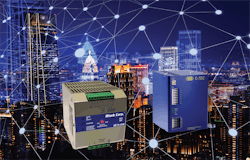
From healthcare facilities to data centers, power continuity is the critical, invisible foundation supporting modern infrastructure. A brief power interruption lasting even a few seconds can quickly spiral into failures, resulting in data loss, equipment damage, safety hazards and substantial financial losses.
Power continuity, which is the consistent, stable delivery of electrical power to equipment even when the primary power source fails, ensures that operations proceed without disruption, making it non-negotiable for success in an interconnected world. As our reliance on digital systems continues to increase, understanding and implementing effective power continuity solutions has evolved from a nice-to-have to an operational necessity.
In this article, we break down the technologies that enable power continuity, focusing on the core components and key distinctions of modern solutions, including integrated uninterruptible power supplies, battery management systems, diverse battery chemistries and high-performance ultracapacitor technology.
The Growing Importance of Power Continuity
The modern economy operates on the assumption that power will always be continuously available. Data centers house the cloud infrastructure that powers remote work and digital services, while telecommunications networks enable the connectivity that businesses and individuals depend on. Healthcare facilities need reliable power to operate critical medical equipment and maintain patient safety, while manufacturing facilities rely on uninterrupted power to maintain production schedules.
The financial impact of power interruptions in these and other applications can be staggering. Beyond immediate operational disruptions, companies face potential data corruption, equipment damage, compromised safety and reputational harm.
READ MORE: Direct Current Uninterruptible Power Supplies for Industrial Applications
Recent trends have only intensified these challenges. For example, the expansion of Internet of Things (IoT) devices has created distributed networks of sensors and edge computing devices that require reliable power in remote or challenging environments.
The shift toward cloud computing has concentrated important infrastructure in data centers, which must maintain continuous operation. Building automation systems that control lighting, HVAC, security and energy management likewise depend on uninterrupted power to function properly.
Key Technologies Enabling Power Continuity
Protecting these valuable systems requires going beyond simple generators and employing purpose-built DC power solutions. These include:
Uninterruptible Power Supplies
At the heart of most power continuity solutions lies the uninterruptible power supply (UPS). UPS systems provide immediate backup power during outages or voltage fluctuations, ensuring seamless operation of connected equipment. These devices continuously monitor incoming power quality and instantly switch to battery power when problems occur, typically in milliseconds—which is fast enough that connected equipment never experiences interruption.
Modern UPS systems come in several configurations, each suited to different applications and requirements:
- Line-interactive UPS systems provide battery backup while offering voltage regulation and conditioning, making them suitable for environments with moderate power quality issues.
- Online or double-conversion UPS systems provide continuous battery backup and comprehensive voltage regulation for applications with critical power quality requirements.
- Hybrid DC UPS systems combine features from different topologies to achieve an optimal balance of performance, efficiency and cost-effectiveness.
The anatomy of a UPS typically includes a battery bank for energy storage, a battery charger that replenishes the batteries when mains power is available, and an inverter that converts stored DC power to AC power for connected equipment. When configured as an all-in-one system, these components work together, with intelligent battery management firmware optimizing power allocation between the load and battery to ensure continuous operation.
READ MORE: Trends and Innovations in Motion Systems for Machine Design
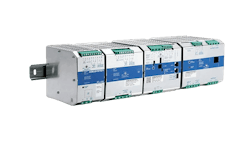
For example, all-in-one DC UPS solutions like Altech’s CBI Series integrate the power supply, battery charger, battery management system and backup module into a single device. These systems feature intelligent battery management firmware that automatically optimizes power allocation between the load and battery, ensuring continuous operation without interruption during battery charging or discharging cycles.
Battery Management Systems
Battery management systems (BMS) are the intelligence behind effective power continuity solutions. These components monitor and manage the battery bank, ensuring optimal performance while preventing conditions that could shorten battery life or cause premature failure. The BMS also tracks key parameters, such as voltage, current, temperature and state of charge, using this data to implement charging algorithms.
Modern BMSs feature multi-stage charging processes that adapt to battery conditions. During the bulk charge phase, batteries receive constant current until they reach a specified voltage threshold. The absorption phase then maintains constant voltage while current gradually decreases.
Float charging provides maintenance-level power to keep batteries fully charged without overcharging. Advanced systems also include recovery modes that can rehabilitate deeply discharged batteries, which prevents waste and extends overall system life.
Rather than waiting for battery failure to occur, operators can receive advance warning when batteries show signs of degradation or reduced capacity. This predictive capability allows the operators to plan battery replacements during scheduled maintenance windows rather than wait for emergency interventions during critical operations.
Battery Chemistry Options
Recent battery technologies have provided power continuity solutions with greater flexibility than ever. Traditional lead-acid batteries remain popular due to their proven reliability and lower initial cost, while sealed lead-acid and absorbed glass mat (AGM) variants offer maintenance-free operation for a wide range of applications.
Other chemistries include:
- Gel batteries, which provide extra durability in demanding environments with extreme temperatures or vibration.
- Lithium-ion (Li-Ion) technologies, which are valuable in applications that need longer runtimes, a compact footprint or rapid recharge capability. Lithium iron phosphate (LiFePO4) batteries, for instance, offer a long cycle life with excellent safety.
- Nickel-cadmium (Ni-Cd) and nickel-metal hydride (Ni-MH) batteries serve specialized applications requiring operation in extreme temperatures or harsh conditions.
Advanced DC UPS systems can support multiple battery chemistries through user-selectable charging profiles, eliminating the need for different charging equipment should the battery technology change.
For example, Altech’s DC UPS products support lead-acid, sealed lead-acid, AGM, gel, Ni-Cd, Ni-MH, Li-ion and LiFePO4 batteries. Simply adjusting jumper settings and restarting the system changes the chemistry, which future-proofs installations and optimizes battery selection based on performance, lifecycle costs and budget.
Exploring Ultracapacitor Technology
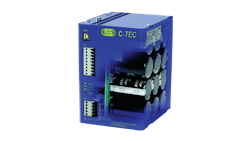
For applications requiring fast response to brief power interruptions, ultracapacitors offer many compelling advantages. These devices store energy in the form of electrical charge, rather than through chemical reactions, enabling extremely fast charging and discharging cycles. This technology also operates reliably across wide temperature ranges and tolerates hundreds of thousands of charge-discharge cycles with minimal degradation.
While ultracapacitors typically provide a shorter runtime compared to batteries, they excel in applications where power interruptions last only seconds to minutes. Manufacturing facilities experiencing frequent but brief voltage sags can use ultracapacitor-based systems to ride through these disturbances without costly battery replacement cycles.
The lack of toxic chemicals and resistance to shock and vibration make ultracapacitors particularly suitable for hazardous environments or mobile applications.
Selecting the Right Power Continuity Solution
Choosing the best power continuity technology requires carefully considering multiple factors. An analysis of load capacity will determine your equipment’s power needs, while runtime requirements depend on whether backup power needs to sustain operations for minutes until generators start, hours to complete critical processes, or days for truly off-grid capability.
In addition, your topology selection should balance factors like protection level, efficiency and cost. Online double-conversion UPS systems provide maximum protection but at higher initial cost and slightly reduced efficiency, while line-interactive systems offer excellent protection for most applications at a lower cost. Understanding power quality requirements can help you identify the appropriate topology.
Other factors to help you select the best power continuity solution include:
Environmental considerations. Operating temperature, humidity levels and exposure to dust or corrosive substances all influence equipment specifications. Battery chemistry selection must account for ambient temperature, since performance varies across different technologies.
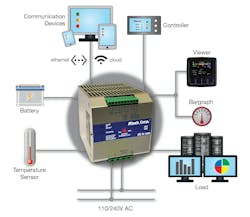
Communication and monitoring. Effective power continuity relies on real-time system communication and monitoring, allowing operators to oversee the entire power protection infrastructure and perform predictive maintenance. The UPS and charging units communicate status both upstream and downstream, facilitating seamless integration with existing building management (SCADA) or industrial control systems, while modern systems can support multiple protocols, including Ethernet SNMP V3, Modbus TCP/IP, HTTPS and CAN bus.
This access provides vital data points on battery status and faults, power metrics (like input/output voltages) and system diagnostics, ensuring full control of operations and helping to avoid costly downtime.
Total cost of ownership (TOC). TOC extends beyond the initial equipment purchase. Installation costs, battery replacement cycles, energy consumption and maintenance needs all contribute to lifetime costs. Higher-efficiency systems may justify premium pricing by minimizing operating costs, for example.
When evaluating DC UPS technologies, look for systems that offer universal input voltage compatibility, covering 96 to 305V AC to operate anywhere in the world, along with scalable designs that can be connected in parallel for increased capacity. Additional features to look for include comprehensive protection features, such as automatic protection against reverse polarity, short circuits, overload and overvoltage.

Integrated Versus Component Solutions
Organizations deploying power continuity solutions must decide between component-based systems requiring separate battery chargers, power supplies and control systems or integrated all-in-one platforms. All-in-one DC UPS systems simplify installation and reduce potential failure points by incorporating all the necessary components—except the battery bank—in a single device.
While component-based approaches offer flexibility for highly customized installations, they require carefully integrating multiple devices and can increase complexity in troubleshooting and maintenance.
READ MORE: Uninterrupted Supply: The Principals Behind 40 Years at Altech’s Helm
Integrated platforms, on the other hand, are preconfigured with optimized interactions between the power supply, battery charger, inverter and BMS. This approach reduces installation time and wiring complexity and ensures all components are designed to work together seamlessly.
Altech’s all-in-one approach demonstrates the advantages of integrated solutions. CBI Series DC UPS products combine the AC/DC power supply, battery charger and BMS with real-time diagnostics, control and monitoring, along with comprehensive protection devices, into a single DIN-rail or wall-mountable unit. This integrated design means users only need to add their chosen battery bank to create a complete power continuity system.
Altech’s integrated solutions include configurable monitoring and management tools. Unlike competing systems that require specialized knowledge of Modbus codes or IT expertise to program and maintain, their DC UPS products can be configured by anyone who can log into a computer through an intuitive interface.
These systems offer multiple monitoring options—from simple dry contact relays to advanced Ethernet IP connectivity—allowing seamless integration into existing infrastructure regardless of complexity level.
The integrated battery management firmware automatically handles sophisticated functions like multi-stage charging, optimized power allocation between load and battery and real-time diagnostics that warn of degrading battery performance. This automation eliminates the need for manual tuning and reduces the technical expertise required for long-term operation.
The choice between these two approaches ultimately depends on application requirements, available technical expertise and long-term maintenance capabilities. For organizations seeking simplified deployment, reduced maintenance overhead and systems that can be managed without specialized technical staff, integrated all-in-one solutions provide the most reliable and cost-effective path to power continuity.
Explore Solutions for Uninterrupted Power
As our dependence on continuous power grows, the technologies enabling power continuity are evolving to meet increasingly sophisticated demands. Modern UPS systems, intelligent battery management and flexible chemistries provide comprehensive solutions for protecting operations.
By carefully assessing your requirements and implementing appropriate power continuity solutions, you can position your operation to maintain reliability, protect valuable equipment and data and ensure safety—even when primary power fails.
Key Applications of Power Continuity Technologies
Data centers. Ensure continuous operation of servers, storage and networking equipment to prevent data corruption and service disruption.
Telecommunications. Maintain operation of cell towers and switching equipment—often using DC UPS—for reliable communication, especially during emergencies.
Healthcare facilities. Protect life-support equipment, medical devices, patient monitoring and critical infrastructure like lighting and electronic medical records.
Industrial manufacturing. Shield PLCs, process control equipment and human-machine interfaces from disturbances that could halt production or cause damage.
Transportation. Guarantee safe operation of airport traffic control, railway signaling and traffic management centers.
Commercial facilities. Utilize DC UPS systems to maintain security, access control and environmental monitoring in building automation.
Emerging applications. Support reliable power for electric vehicle (EV) charging stations and in renewable energy installations using battery storage. UPS systems also provide power to remote monitoring stations (like weather stations) in locations with unreliable or absent grid power.
About the Author

Laszlo Gyorgypal
Product and Quality Control Manager, Altech Corp.
Laszlo Gyorgypal is a product and quality control manager at Altech Corp.
Voice Your Opinion!
To join the conversation, and become an exclusive member of Machine Design, create an account today!

Leaders relevant to this article: