Not All “Flexible” Cables Are Created Equal
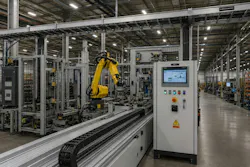
During cable selection, “flexible cable” is a term that can easily get misinterpreted. Simply because a cable is called flexible does not mean it is appropriate for all situations. Truth is, flexibility is not a single property; it is a spectrum of mechanical performance defined by application, motion type, construction and tested life cycle.
And flexible cable selection comes with serious implications. Choosing the wrong type can lead to premature failure, costly replacements and unplanned downtime. Flexibility for installation is fundamentally different from flexibility for motion.
This article will describe the various designations for flexible cables in modern industrial systems, summarizing their characteristics and features. It will also explain why proper testing is critical to prove they are ideal for the application, and it will offer best practices for choosing an optimal cable that will perform reliably in its intended usage scenario.
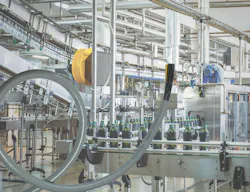
1. Stationary (flexible for installation only). Flexible cables for stationary applications are intended to be bent during installation and remain static thereafter. Applications that typically use static cables include control panels, cable trays and stationary machinery. Because installation space is often limited, these environments often require tight bend radii.
Selecting a cable with an appropriate minimum bend radius helps maintain signal integrity while avoiding overbending, which can damage the cable and reduce its service life. In applications where electromagnetic interference (EMI) is a concern, designers may need to balance shielding requirements with cable flexibility.
When specifying stationary control cables, look for designs with a small outside diameter and a bend radius suited to the available installation space. Some manufacturers, such as SAB flexible power and control cables, use conductor stranding and cable construction techniques that reduce mechanical stress during installation, helping cables withstand tight bends without compromising performance. Stationary control cables also tend to have simpler constructions than cables designed for continuous flexing, which can reduce cost.
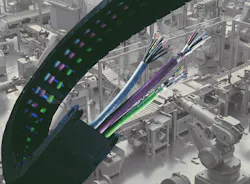
2. Continuous flex (dynamic/cable track applications). Systems and equipment that run nonstop with frequent linear motion, often at high speeds, demand highly durable cable. Continuous flex cable is designed for repetitive back-and-forth bending typical of drag chains, automation systems, robotic arms and packaging equipment. The cables typically have a rated bend radius of 5 to 10 times their outer diameter, ensuring a long flex life of millions of cycles in automated systems.
If your application involves continuous motion, check with your cable supplier to be sure that your desired cable is designed and tested for multi-axis flexing and alternate bending. In addition, continuous flex cables should be made from robust materials like polyvinyl chloride (PVC), polyurethane (PUR) or thermoplastic elastomer (TPE) to resist abrasion, chemicals and washdowns for a long service life.
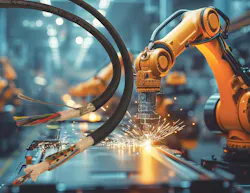
3. Torsional flex (robotics/twisting motion). Torsion cables transmit power or control signals to high-speed, heavy-duty twisting applications often found in robotic arms, wind turbines or other rotating equipment. Torsion cables can be used in cable tracks or in dry, wet or damp conditions and wherever cable tracks are not possible.
Suitable for medium mechanical stress, torsional flex cables are designed with finely stranded conductors that allow them to twist repeatedly along their axis without damage. Depending on their construction, these cables can withstand torsional movement over millions of cycles, making them suitable for applications where continuous twisting is expected.
Cable construction plays a key role in torsional performance. Jacket materials such as polyurethane (PUR) or polyvinyl chloride (PVC), combined with insulation materials including thermoplastic elastomers (TPE) or PVC, help improve resistance to twisting, bending and abrasion. When selecting a torsional flex cable, engineers should evaluate the allowable torsion angle, expected cycle life and environmental conditions to ensure the cable is matched to the application's mechanical demands.
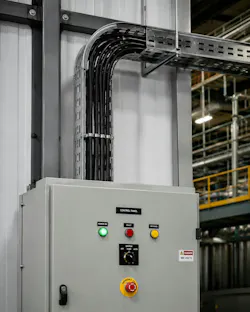
4. Tray cables (not flexible cables). This is another cable type often confused with cables for dynamic applications. But make no mistake, they are not intended for motion. Tray cables are designed, as the name suggests, for tray installations and, if in accordance with NEC regulations, exposed runs of typically 6 ft. or less. Tray-rated cables are classified as UL type TC, and those rated for outside the tray carry a UL EC-ER designation and are labeled as such. Applications include industrial automation, control systems, wind turbine systems and manufacturing equipment.
Tray cables should carry UL (or CSA, in Canada) approvals and have voltage ratings that match the application and shielding to prevent EMI—important considerations for industrial Ethernet, PLCs and motor drives. TC-ER cables carry a UL 1277 rating, which indicates they have undergone impact and crush tests for use outside of trays and conduits.
While these cables are not flexible for movement, they should have sufficient flexibility to match the actual cable tray layout. Don’t forget environmental factors like sunlight, oil and chemical resistance.
Why Construction Matters
The degree to which cables bend, twist and flex depends on the materials used in their construction. For example, cables that aren’t suited for continuous flex operation may corkscrew, which leads to broken conductors, ruptured jacketing and, ultimately, premature failure.
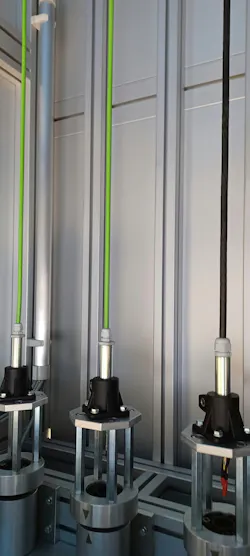
To assess a cable’s flexibility, look inside at the conductors. High strand count conductors made of tin or bare copper strands with extra fine wires offer greater pliability to endure stress and withstand tighter bends without fatigue or breaking. Fine strands must be properly engineered to avoid kinking. Conversely, tray cables typically use conventionally stranded conductors that cannot support motion, even if they may bend during installation.
For continuous-flex applications, conductor stranding and lay pitch play a critical role in resisting fatigue from repeated bending and mechanical stress. The optimal conductor design depends on factors such as bend radius, flexing frequency, travel distance and overall mechanical loading. Strand geometry, lay construction and manufacturing methods all influence a cable's flexibility and fatigue resistance, so these characteristics should be evaluated alongside the application's expected cycle life and operating conditions.
Another factor in cable flexibility: the conductor design. For continuous flexible cables, it is very important that the various layers in multi-strand cables are specifically adjusted to one another. For certain applications or very long travel distances, bundled conductors can be very advantageous. That is why it is important to understand the specific application.
For the cable jacket, polyurethane (PUR) and polyvinyl chloride (PVC) are commonly used because they provide flexibility for high-speed, repetitive motion, along with durability in industrial environments and resistance to oils and chemicals.
Flex-Life Testing Provides Certainty
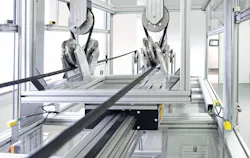
Although a cable may be presented as flexible, the only way to be certain it delivers the flexibility needed is through validated test data. Testing will predict the cable’s viability and reliability in a specific application, prevent unplanned downtime and reveal its real-world lifetime.
At SAB, we validate flexible cables by testing:
Bend cycles. Cables perform a certain number of bends per minute at various bend radii under certain speeds and accelerations. Then we reverse the motion, creating an additional hardship to ensure continuity. The cables are monitored for broken conductors, jacket damage or kinks. Most cables can withstand 8 to 10 million flex cycles while some cables can achieve 20 million cycles.
Torsion cycles. Cables perform a certain number of twists per minute to make sure they provide the correct electrical output without kinks or damage to the jacket. SAB twists cables at 540-deg. torsion angles in both directions. Most torsion cables can perform 5 million torsions on average, and some torsion cables can exceed that figure.
Bend radius compliance. We test flexible cables to ensure compliance with relevant standards for minimum bending radius, which is a multiplier of the outer diameter.
Environmental stress. Cable materials are exposed to oils and chemicals, and they undergo tensile elongation tests to check their structural stability.
Let Application Details Drive Selection
When specifying a cable, it’s not enough to ask, “Is this cable flexible?” Instead, let your application details guide you through the following questions:
- Is the application static or dynamic?
- What type of motion: bending, torsion or both?
- What is the required cycle life?
- Has the cable been tested for application?
Consulting with a connectivity and cable expert to evaluate these criteria and analyze actual test results will help you choose a cable with appropriate flexibility. This proactive approach avoids unforeseen equipment failures while maintaining long-term productivity and system availability.
About the Author
Rick Orsini
Product Manager, SAB North America
Voice Your Opinion!
To join the conversation, and become an exclusive member of Machine Design, create an account today!
 Leaders Logo
Leaders relevant to this article: