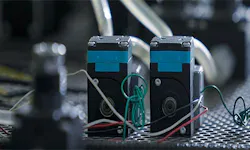
Your country is not included? Please visit our global website Language Making the Choice: Diaphragm vs. Peristaltic Pumps Regardless of application, selecting the best pump for the job can be difficult. While there are many liquid pump technologies available, diaphragm and peristaltic pumps are both used frequently. But which of these technologies is better? And for which applications? Choosing a pump can be difficult as there are many factors to consider, and some challenges come along with a wide variety of pump technologies from which to choose. Two of the more frequently employed liquid pump technologies are diaphragm and peristaltic pumps. Both pump types are used in a variety of applications. In the following, we discuss the advantages and disadvantages of these distinct pump technologies. How Diaphragm and Peristaltic Pumps Work Diaphragm and peristaltic pumps are both commonly used in liquid transfer applications. While they are often used in similar applications, the principles behind these technologies are very different. Diaphragm pumps operate by driving a flexible diaphragm up and down. This motion displaces media, in this case liquid, within a working chamber to generate flow. Peristaltic pumps, sometimes called tubing pumps or roller pumps, use tubes fitted inside a cartridge. Rollers compress the tubing as they rotate, forcing liquid through. Which Pump Technology is Best For Liquid? Both pump types are common in a variety of applications including medical, laboratory, chemical/petrochemical, inkjet printing and agriculture. When choosing a pump, a variety of factors need to be considered. Some of the most important are: Lifetime costs Use with dangerous liquids But how do the two pump technologies compare in terms of these factors? Which has the advantage in each of them? Diaphragm pumps, like KNF’s FP 70, operate by driving a flexible diaphragm up and down, displacing media to generate flow. Lifetime Costs Peristaltic pumps typically have a lower upfront cost. However, the cost of operating them over time rises quickly. Their tubes need to be replaced frequently, which can drive up costs. While replacing tubes is a relatively simple process, it is also required frequently, which drives up lifetime costs. Maintenance of rotors and other internal parts also tends to be more complex and expensive. In general, the lifetime cost of a diaphragm pump is going to be lower than that of a peristaltic pump. Reliability Peristaltic tubing needs to be replaced frequently, several times each year in some cases. It can be expensive, and depending on the application, tubing made from specialty materials may be required, potentially driving up costs even further. Cleaning and Sterilizing With peristaltic pumps, the tubes can be removed, discarded, and replaced, saving time and streamlining the cleaning process. As long as the tubes are replaced regularly and have not leaked or ruptured, the rest of the pump does not need to be cleaned to maintain media integrity. In addition to a more streamlined cleaning process, peristaltic pumps are also much easier to sterilize. This is important for some lab and other applications where frequent sterilization is required. Because the media only comes in contact with the tubes, only the tubes need to be sterilized. Peristaltic pumps, like the one shown, use rollers to compress liquid through tubes, causing it to flow. Flow and Pulsation Which pump technology better meets flow needs depends on the specific application. Peristaltic pumps are a better option requiring multi-directional flow. Diaphragm pumps are preferable for applications requiring consistent, smooth flow and low pulsation. Use With Particulates and Shear Sensitive Media Diaphragm pumps are good at handling most types of shear sensitive media. However, peristaltic pumps are a better option for extremely shear sensitive media, like blood or cells. Because their pumping action is relatively easy on the liquid, peristaltic pumps have a lower chance of damaging or agitating suspensions being pumped. Use with Dangerous or Extreme Temperature Liquids Diaphragm pumps are routinely offered with chemically resistant flow path materials. As with peristaltic pumps, these materials can drive up cost. But diaphragm pumps require infrequent preventive maintenance, unlike the frequency required for safe handling of dangerous liquids with peristaltic pumps. Diaphragm pumps are also better for handling liquids of extreme temperature. Most tubing available for peristaltic pumps is not suitable for transporting excessively hot or cold media. Extremely hot liquid can make tubing too soft, impacting flow rate and increasing the potential of tubes bursting. Similarly, extremely cold liquids can make tubing too rigid for good flow performance. While diaphragm pumps may require special materials for these processes, they are far more suited to transferring hot and cold media. Choosing a Pump While diaphragm pumps tend to be a better fit for more applications, that is not always the case. The choice between pump technologies depends on the individual requirements of an application. Diaphragm pumps are less expensive over their lifetime to maintain, have a lower overall cost of operation, and last longer. They are easy to maintain and repair and provide a variety of options for a more consistent and smoother flow as well as low pulsation. They are also the better choice for applications dealing with harsh, caustic, and extreme temperature liquids. Get in touch with KNF to learn more about out custom diaphragm pump solutions. Contact Us Do you want to find out more about our customized pump solutions and service opportunities? Get in touch with our local sales representatives.