Why Aluminum & Titanium Vacuum Chambers Benefit Quantum Computing
Key Highlights
- Quantum computing is used in data centers now, quantum sensing devices are in prototype, access to quantum processing power is expanding rapidly, and many industries will be significantly impacted in the next 5 years.
- Qubits, the quantum equivalents of classical computing bits, require vacuum isolation from environmental interference to maintain their quantum state.
- Aluminum and titanium vacuum chambers provide low contamination, magnetic neutrality, superior thermal management, and reduced vibration and mechanical noise.
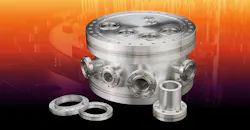
Quantum computing is revolutionizing materials design, space exploration, drug discovery, climate modeling, and many other fields. According to a recent McKinsey report, pharmaceuticals and material sciences will see integration within the next 5 years, whereas logistics, energy, utilities, and other industries are further out. One company, Atlas Technologies, a specialist in aluminum and titanium vacuum chambers with bimetal transitions, is already seeing a ramp-up in orders for use in quantum applications.
Institutions like the Cleveland Clinic and IBM already operate dedicated quantum computing sections in their data centers. In addition, cloud access to quantum processing power is expanding rapidly, and quantum sensing capable of detecting subterranean water tables and mineral deposits from space is in the prototype stage.
However, qubits, the quantum equivalents of classical computing bits, are extraordinarily sensitive to disturbances. They exist in fragile quantum states that decohere when they interact with gas molecules, electromagnetic interference, thermal noise, or vibration. Thus, every aspect of the operating environment must be controlled, and at the center of that engineering challenge is the vacuum chamber.
Why High-Performance Vacuum Is Non-Negotiable in Quantum
A quantum computer exists in a layered architecture known as the quantum stack, which includes:
- The quantum processing layer, where qubits perform calculations
- The cryogenic layer, which maintains the near-absolute-zero temperatures required for many qubit types
- The control electronics layer, which delivers microwave signals and power
- The infrastructure layer, which encompasses shielding, enclosures, and vacuum systems
The quantum processing and cryogenic layers are particularly sensitive to environmental interference, making vacuum technology foundational to every tier of the stack.
Ultra-high vacuum (UHV) and extreme-high vacuum (XHV) conditions eliminate the factors that would otherwise disrupt quantum states. And because most superconducting qubit platforms operate at millikelvin temperatures and require dilution refrigerators to reach those conditions, an effective vacuum environment surrounding the cryogenic stages eliminates heat infiltration that would overwhelm the cooling system.
Vacuum Requirements Across Qubit Technologies
Different qubit architectures require vacuum for distinct reasons, but all share the same fundamental need — isolation from environmental interference.
- Superconducting qubits require UHV conditions during chip fabrication and cryogenic vacuum insulation during operation.
- In trapped ion systems, the cleanliness of the vacuum directly determines system performance. Neutral atom platforms are sensitive to background gas collisions and other disturbances. Photonic quantum systems are less sensitive to gas-phase disturbances than other modalities, but they rely on vacuum-enclosed optical hardware for stable beam alignment.
- Quantum sensors such as atomic clocks, gravimeters, and atom interferometers — believed to represent one of the most immediate commercial applications of quantum technology — also require UHV or XHV.
Superior Vacuum Performance at UHV and XHV Levels
Because any flaw in the system can render it unable to function, quantum engineers build incredibly robust testing and control mechanisms. Thus, they have a huge and ongoing need for UHV or XHV chambers. Many find aluminum and titanium especially well-equipped to maintain the necessary purity and vacuum status.
Aluminum and titanium vacuum chambers consistently achieve one to two orders of magnitude higher vacuum than stainless steel systems. This performance advantage is primarily driven by their significantly lower hydrogen content and hydrogen outgassing rates. The result is:
- Faster vacuum pump-down
- Lower ultimate pressures
- Reduced long-term outgassing
- Lower bake-out temperatures and times, particularly for aluminum
- Aluminum vacuum systems retain their bake after the initial bake and attain higher vacuum more quickly on their second pump-down
- Aluminum bakes evenly to achieve a more thorough bake-out
- Titanium may be ultra-baked at very high temperatures
Magnetic Cleanliness and Reduced Magnetic Noise
Both aluminum and titanium are nonmagnetic, providing a critical advantage in quantum computing environments. This magnetic neutrality is especially important for superconducting, spin-based, and hybrid qubit architectures.
Optimized Thermal Properties for Cryogenic Operation
Thermal management is one of the most critical challenges in quantum computing systems. Aluminum's thermal conductivity makes it ideal for rapid thermalization and efficient heat sinking in cryogenic assemblies. Titanium provides controlled thermal isolation where limiting heat conduction paths is necessary. Together, they enable precision thermal engineering in complex quantum systems.
Aluminum exhibits exceptionally high thermal conductivity — approximately 160-190 W/m·K at room temperature versus ~14 W/m·K for stainless steel, making aluminum ideal for efficient heat extraction. Even though thermal conductivity decreases for most metals at cryogenic temperatures, the relative advantage of aluminum is preserved at cryogenic temperatures.
Due to its high thermal conductivity, aluminum systems present more predictable thermal distortion. Even though aluminum has a higher coefficient of thermal expansion, heat is more evenly distributed in aluminum than stainless steel, resulting in greater dimensional stability.
Titanium is best for controlled thermal isolation. With a thermal conductivity of approximately 21.9 W/m·K, titanium is ~50% more conductive than stainless steel and significantly less conductive than aluminum. This allows engineers to limit unwanted heat conduction paths, maintain thermal gradients, and mechanically support structures without excessive heat leakage. This property is especially useful in systems where different components must be maintained at different temperatures simultaneously, with minimal thermal crosstalk between stages.
Titanium's dimensional stability under thermal cycling makes it ideal for electrical feedthroughs and optical access ports where ceramic-sealed junctions must survive repeated temperature cycles from ambient to cryogenic without developing leaks. These feedthrough configurations are critical in quantum systems as they carry microwave control signals, DC bias lines, fiber-optic connections, and other services into the vacuum environment while maintaining hermetic seal integrity across thousands of thermal cycles.
Titanium is more expensive because large titanium billets are difficult to source, and titanium demands specialized welding expertise. But for certain quantum applications, titanium properties are irreplaceable.
Radiative Heat Suppression Using Aluminum Cryostats
Aluminum’s low thermal emissivity provides another major advantage for cryogenic systems. As a “white metal,” aluminum is inefficient at radiating and/or absorbing heat. This property can be exploited in aluminum cryostats that incorporate nested, polished aluminum radiation shields, arranged concentrically like Russian dolls. These interlayers dramatically suppress radiative heat transfer from ambient environments into cryogenic regions.
To further enhance performance, Atlas Technologies has developed a proprietary UHV-compatible aluminum polishing process known as Emissivac™ surfacing. The resulting highly polished surfaces minimize emissivity and serve as highly effective radiant heat shields in quantum computing systems
Reduced Mass with Increased Mechanical Stability
Both aluminum and titanium are significantly lighter than stainless steel, reducing the overall mass of quantum computing systems. They both have a higher strength-to-weight ratio than stainless. This lower mass offers several system-level benefits:
- Reduced mechanical loading
- Easier handling and installation
- Lower vibrational energy storage
Both materials exhibit a lower Young’s modulus than stainless steel. These properties reduce mechanical ringing and vibration, which can couple into sensitive quantum systems and contribute to decoherence.
Combining the Advantages of Multiple Metals
In practice, Atlas Technologies quantum customers often combine aluminum and titanium strategically within a single system — aluminum for the main chamber body and radiation shielding where thermal conductivity and low emissivity are paramount, and titanium for flanges, feedthroughs, and transition interfaces where thermal isolation and dimensional stability are critical. Bimetal transitions allow these dissimilar materials to be joined hermetically, enabling system designers to deploy each material where it performs best.
Aluminum and titanium chambers support quantum computing well for a variety of reasons, including:
- Cleaner vacuum environments
- Lower hydrogen and hydrogen-based outgassing
- Magnetic neutrality
- Superior thermal management
- Reduced vibration and mechanical noise
- Lightweight, scalable system architectures
Ultimately, better vacuum and thermal stability lead directly to reduced contamination, longer coherence times, and more reliable quantum operation, making aluminum and titanium vacuum systems foundational technologies for quantum computing platforms.
Atlas Technologies specializes in aluminum and titanium vacuum systems with bimetal transitions, delivering both custom and production vacuum chambers for the quantum computing industry. Atlas has direct experience supporting trapped-ion systems, gravity sensing instruments, cryostat assemblies, photonic platforms, and emerging commercial quantum architectures. To learn more or to get a quote, visit atlasuhv.com or send us an email at [email protected].