The Future of Robotics: Why Physical AI Matters More Than Human Appearance
By Poornima Apte for Mouser
Published September 25, 2026
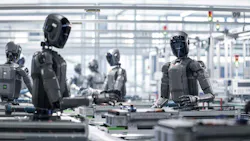
Morgan Stanley estimates that the humanoid robot market could surpass US$5 trillion by 2050.[1] Given the scale of that projection, it is worth asking a fundamental engineering question: Must a robot take human form to do human work?
Our fascination with the humanoid robot likely traces to its pop culture roots, both in movies and literature. After all, the many different droids from Star Wars have a lingering hold on our collective imagination, as do the robot-like creatures in the Transformers franchise.
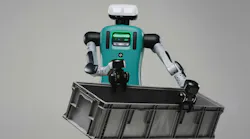
In January 2026, Boston Dynamics unveiled its newest version of a humanoid robot, Atlas, boasting 56 degrees of freedom, fully rotational joints, a reach extending to 2.28m (7.5ft), and the strength to lift up to 49.9kg (110lb).[2]
Such advances notwithstanding, the robotics industry is rife with experts both excited and skeptical about the value of humanoids and whether they’re ready for widespread adoption.
Human Abilities Matter More Than Human Appearance
The human body is an obvious blueprint for robots working in spaces built for people. But replicating that blueprint introduces engineering complexity, such as balancing on two legs and coordinating dozens of joints and actuators. This complexity can increase costs related to hardware, maintenance, and ongoing engineering, so the use of humanoid robots will need to demonstrate a significant return on investment (ROI). For now, the ROI is uncertain because not every robotics problem requires a machine that looks like a human.
The biggest draw of a general-purpose humanoid robot is that a single robot on a single platform can perform a variety of tasks, much like a human does. The fact that it looks like a human is the feature that draws the most attention, although it’s not the one that company executives likely care about.
Instead, engineers can incorporate human abilities, such as hand dexterity for object manipulation, vision to detect objects, and intelligence to process and advance goals, and transpose them to any form factor.
Next, the engineers need to determine what form the robot will take. Should it have mix-and-match human traits instead of creating a single do-it-all machine? Such fundamental questions are shaping the field of robotics, especially as physical AI enables robots to become more autonomous and respond to their environment in real time instead of simply following preprogrammed instructions.[3]
>>Read the entire article at Mouser
Sources
[1]https://www.morganstanley.com/insights/articles/humanoid-robot-market-5-trillion-by-2050
[2]https://bostondynamics.com/blog/boston-dynamics-unveils-new-atlas-robot-to-revolutionize-industry/
[3]https://www.ibm.com/think/topics/physical-ai
[4]https://arxiv.org/abs/2412.14058
[5]https://apptronik.com/apollo/apollo-2
[6]https://locusrobotics.com/locusone/warehouse-agentic-ai
[7]https://pal-robotics.com/robot/tiago/
[8]https://www.diligentrobots.com/moxi
[9]https://www.automate.org/robotics/blogs/how-human-does-a-humanoid-robot-need-to-look