Industry 5.0: The Shift Toward Human-Robot Collaboration
By Mouser APAC Technical Marketing Staff
Published February 2, 2026
Imagine driverless taxis that safely pick up and drop off riders at their destinations or mass-production lines that seamlessly deliver a variety of custom-ordered, 3D-printed parts made of materials such as metal, resins, thermoplastics, elastomers, and photopolymers. What if factory machines could self-diagnose issues and recommend repairs?
In the Fifth Industrial Revolution, these examples, once seen as science fiction, have become reality. Also known as Industry 5.0, this revolution builds on the technological developments of the first quarter of the century. This quickly evolving era marks a shift toward enhanced collaboration between humans and machines. Key technologies enabling this shift include artificial intelligence (AI), machine learning (ML), collaborative robots (cobots), and 3D printing. Industry 5.0 shifts the focus from full automation to a future where augmented human skills and human-machine collaboration improve both efficiency and worker well-being.
How Industry 5.0 Builds Upon 4.0
During the First Industrial Revolution, also known as the Mechanical Revolution (1760s–1840s), the invention of the steam engine and the use of mechanical energy led to the introduction of factory-based production. Lowered production costs, increased quality control, and the ability for consumer material industries—such as textile, iron, and steel—marked a fundamental shift in how humans acquired and produced goods. The Second Industrial Revolution (1870s–1914) followed, introducing electricity and assembly lines for mass production. These inventions quickly gained momentum during World War I and continued to evolve over the next six decades as automobiles, home appliances, and air travel became standards of modern living.
The addition of computing power and the advent of electronics—a period known as the Information Age—provided a global digital foundation for the Intelligence Revolution of the 2000s. This era, also known as Industry 4.0, introduced smart technology such as the Internet of Things (IoT), AI, ML, and other software algorithms. These innovations enabled automation of workflows and processes in the manufacturing industry.
As Industry 5.0 has emerged, it has often been viewed as an evolution of Industry 4.0. Global challenges, such as climate change, talent shortages, and tariffs, are disrupting supply chains, production lines, and markets. In addition, some sources estimate that more than half of the companies that fully replaced workers with automation and AI now regret the decision and plan to rehire.[1]
These obstacles, combined with the real-world drawbacks of full automation, have underscored the need to shift toward a more human-centric, collaborative approach. This new approach emphasizes technology that augments human capabilities instead of replacing them. In addition, the European Union’s focus on sustainability and its 2050 climate neutrality goals reinforce the need to develop Industry 5.0 technologies that support both the welfare of workers and the planet.[2]
Real-World Use Cases for Industry 5.0 and Its Enabling Technologies
Industry 5.0 is backed by several existing, emerging, and evolving technologies. These tools can be applied to use cases ranging from transportation and manufacturing to healthcare and beyond. The following are three real-world examples of Industry 5.0 and the technologies that make them possible.
Cobots
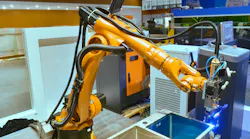
Cobots work safely alongside humans, assisting with a variety of repetitive and precision-driven tasks. These tasks include moving shipping boxes or pallets in warehouses, performing precise welds or intricate assemblies, transporting people, stocking shelves, or delivering food to tables in a restaurant or to someone’s front door.
Cobots are commonly used in industrial settings, such as automotive manufacturing. For example, prior to 2020, the automotive parts manufacturing industry in China relied heavily on manual labor for screw assembly. As industry standards evolved, the need for precision in screw fastening became critical for vehicle quality and safety, prompting manufacturers to adopt automation.[3] However, traditional industrial robots struggled in compact production spaces that required collaboration between humans and robots.
Cobots proved to be an ideal solution. With a suitable working radius and multiple degrees of freedom (DoF), they can tighten screws from multiple angles while applying optimal torque. Since then, collaborative robots have grown into intelligent partners, working safely alongside humans on the production line.
Industry 5.0 technologies used: Edge computing (which enables real-time decision-making at the source rather than at a central cloud or data center), edge networking, AI, ML, and advanced sensor systems.
Predictive Maintenance
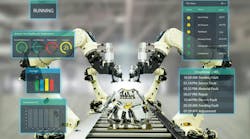
Using AI, ML, automation, and real-time data, companies can now continuously monitor machines and accurately predict when they require maintenance. This ability enables organizations to avoid the maintenance-related risks of shutdowns and production delays. If any challenges arise, the technology can diagnose problems and provide maintenance technicians with pertinent information for quick resolution.
Predictive maintenance technology is replacing traditional fault detection and control methods in modern automobiles. By using advanced sensors that detect patterns or deviations in vibrations or sound frequencies, cars can provide their owners or mechanics with early information on potential problems, helping to avoid possible failures before they occur.[4] This reduces downtime and maintenance costs while improving safety and fuel efficiency in both commercial and personal vehicles. Predictive maintenance also helps engineers during development phases with “what-if” modeling, preventing resource waste, and allows them to detect and remove design risks before production.
Industry 5.0 technologies used: AI, ML, IoT, the Internet of Everything (which connects people, processes, and data in a unified ecosystem), 5G and 6G networks, and advanced sensors and digital twins (virtual representations of systems or processes that enable simulation, optimization, and predictive maintenance).
>>Read the entire article at Mouser
Sources
[1]https://www.computerworld.com/article/4084372/analysts-companies-will-face-setbacks-after-ai-layoffs.html
[2]https://finance.ec.europa.eu/capital-markets-union-and-financial-markets/company-reporting-and-auditing/company-reporting/corporate-sustainability-reporting_en; https://climate.ec.europa.eu/eu-action/climate-strategies-targets/2050-long-term-strategy_en
[3] Yangzhou Mechanical and Electrical Equipment Maintenance Service Association, email communication with Mouser Electronics, December 2025.
[4]https://resources.pcb.cadence.com/blog/2023-predictive-maintenance-for-the-automotive-industry
[5]https://health.ucdavis.edu/news/headlines/the-future-of-surgery-using-augmented-reality-goggles-in-the-operating-room/2024/08
[6]https://www.abiresearch.com/blog/ar-remote-assistance