XINTC Unveils Near-Maintenance-Free Multicore Electrolyzer System for Green Hydrogen
Key Highlights:
- XINTC has introduced an advanced electrolyzer that uses polymer components to replace expensive metals, significantly lowering material costs and simplifying manufacturing.
- Vibration welding technology ensures robust, leak-free assembly of the 102-layer cell stacks, supporting automated production and long-term reliability.
- Designed for dynamic operation, the system can handle fluctuating renewable energy inputs without performance loss or increased maintenance.

To meet the annual global demand of approximately 100 megatons of hydrogen, the industry relies primarily on energy-intensive processes that extract hydrogen from fossil feedstocks such as natural gas, oil and coal. These processes have been in use for decades, but they inevitably generate carbon dioxide (CO₂) as a byproduct. Only about 4% of the world’s hydrogen supply is currently produced through electrolysis.
In this process, electrical energy is used to split water into hydrogen and oxygen, without direct CO₂ emissions. However, the climate benefit of so-called green hydrogen depends on the electricity being sourced from renewable energy, primarily solar and wind power.
One of the most widely used electrolysis methods is alkaline electrolysis. In this process, hydrogen is produced in stacks of electrochemical cells, each equipped with a positive electrode (anode) and a negative electrode (cathode). An electrolyte solution, consisting of water with dissolved potassium hydroxide (KOH), circulates through the cells and enables ion transport.
Under the influence of an electric current, water molecules are split; oxygen evolves at the anode and hydrogen at the cathode. A porous separator positioned between the electrodes allows ions to pass while preventing the generated hydrogen and oxygen gases from mixing.
Most conventional alkaline electrolyzer technologies are based on large, mechanically clamped stack assemblies composed of dozens of electrochemical cells. These cells contain membranes and electrodes and are separated and sealed using EPDM gaskets and insulating plates. Such systems require significant quantities of structural metals, including titanium and nickel, and often rely on costly precious metal catalysts such as iridium and platinum.
As gaskets age and dry out, increasing the risk of hydrogen leakage, periodic disassembly and maintenance become necessary. Catalyst materials must also be replenished or replaced over time, further increasing operating costs.
Integrating these electrolyzer systems with intermittent renewable energy sources, such as solar and wind, introduces additional challenges. Frequent start-stop cycling accelerates the degradation of critical components and can reduce overall system performance, typically requiring component replacement every 3-4 years.
A Simpler, Polymer-Based Electrolyzer Stack
XINTC B.V., based in Eerbeek, Netherlands, is introducing an advanced alkaline electrolysis technology that redefines the conventional architecture of alkaline systems and opens the door to cost-effective green hydrogen production. The technology is designed for broad applicability and combines technical simplicity with high operational flexibility.
The system can be powered by a wide range of electricity sources, including solar and wind energy, battery systems and the grid, and is optimized for dynamic operation so it can respond to fluctuations in renewable energy without performance loss. This design also eliminates the need for expensive precious metal catalysts.
The system is fully standardized and modular, resulting in a low-maintenance system that can scale from compact installations to multi-megawatt configurations.
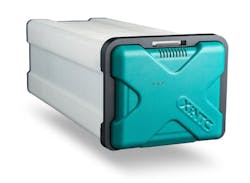
“The development of this product was a long journey,” says Wilko van Kampen, CEO of XINTC. Over a 12-year period, the development team engineered an affordable, polymer-based electrolyzer stack housed in a standardized 24 × 24 × 70 cm enclosure known as a gas module. Each module consists of 102 thin, layered subassemblies made up of multiple injection-molded components.
Every layer functions as a complete electrolysis cell, including electrodes, a proprietary diaphragm separator and integrated channels for liquid supply and gas removal. Gas-tight plastic-to-plastic joints replace conventional replaceable seals and metal interconnect plates between cells.
In the structural portions of the stack, engineered polymers replace expensive metals and metal oxides, while metals are used only where functionally required, specifically in the electrodes.
Vibration Welding Enables a Leak-Free Stack Design
According to van Kampen, developing a reliable assembly method for this polymer-based unit required careful engineering, multiple design iterations and extensive testing. “We evaluated adhesive bonding but ultimately selected a welded design because it is more robust and supports standardized, automated manufacturing.”
Welding a stack of 102 thermoplastic cell layers required precise process control. As the height of a welded cell stack increases, the force and vibration required to weld each successive layer must be carefully managed to preserve the integrity of the underlying welds.
A multiyear collaboration with Emerson and the engineering team at Branson Ultrasonics resulted in a successful solution: a vibration welding process based on a Branson vibration welding platform, combined with a suite of specially developed tooling to stabilize the stack during assembly.
“Our collaboration with Emerson was absolutely critical to the success of the design,” says van Kampen. Each completed gas module contains several hundred leak-tight welds, including vibration welds within the stacked cell layers.
Modules also utilize Branson ultrasonic welds in selected base plate and fluid channel components. “Every weld in every module is essential to the reliable operation and guaranteed performance of the system,” he added.
Lower-Cost, Sustainable Green Hydrogen from Renewable Energy
XINTC states that its new alkaline electrolysis technology represents a significant step toward cost-effective and sustainable green hydrogen production. According to van Kampen, the system can be directly coupled to intermittent renewable energy sources, including solar and wind power, without negatively affecting performance or component lifetime.
He adds that XINTC gas modules are designed as low-maintenance units with a proven lifetime of at least 100,000 switching cycles and a minimum of 87,500 operating hours—minimum 10 years.
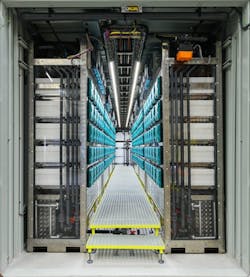
So-called system sections, each consisting of 30 modules, serve as the scalable building blocks of larger electrolyzer installations. In a 24-hour period, single section converts 150 kilowatts of nominal electrical power, with a 200 kW peak capacity, into approximately 20.5 kilograms of hydrogen at a minimum purity of 99.5%.
By combining multiple sections, production capacity can be expanded modularly, allowing users to start at a smaller scale and progressively scale up to electrolyzer systems rated at 100 megawatts or more.
About the Author
 Emma Wood
 Emma Wood
Director of Marketing, Branson Europe at Emerson
Emma Wood is the director of Marketing for Branson Europe at Emerson. Wood holds an undergraduate degree from Maynooth University, a master’s in management and an advanced program certificate in Transformational Change for Global Markets from Dublin City University.
 Silvio Fuchs
Silvio Fuchs
Energy Storage Segment Manager, Branson at Emerson
Silvio Fuchs is Energy Storage segment manager at Emerson’s Branson business, where he has spent 26 years in technical and management roles. He holds a master's degree in engineering (Diplom-Ingenieur) in process engineering from Hochschule Anhalt, University of Applied Sciences. In his current role, Fuchs focuses on developing long-term customer collaborations and helping solve challenging assembly requirements across the full spectrum of Emerson Branson technologies.
Voice Your Opinion!
To join the conversation, and become an exclusive member of Machine Design, create an account today!
 Leaders Logo
Leaders relevant to this article: