From Formula 1 to Road Cars: The Engineering Behind Wheel Personalization
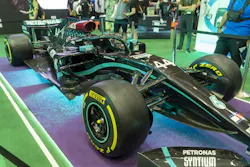
A Formula 1 livery is the complete visual treatment applied to a F1 car, including its colors, graphics, sponsor markings and surface finishes. It must be recognizable at speeds exceeding 200 mph, yet it is applied to one of the most tightly engineered surfaces in motorsport.
That makes an F1 car an excellent example of the relationship between aesthetics and engineering. The bodywork is not shaped around the graphics. The graphics must accommodate surfaces developed around airflow, cooling, heat management, packaging and structural requirements.
As an electrical engineer who has worked extensively in research and development centers, I have seen this principle across different areas of technology: Design freedom rarely disappears, but it must operate within clearly understood technical constraints. Today, I see the same relationship in the personalization of automotive wheels.
A wheel may begin as a visual choice, but changes to its dimensions, geometry, mass or material can influence how an entire vehicle performs. Formula 1 offers a useful engineering lesson: Personalization works best when appearance is considered alongside the design requirements and performance of the vehicle as a whole.
Where Does Styling End and Engineering Begin on an F1 Car?
On an F1 car, engineering establishes the canvas before visual design begins. Wings, sidepods, cooling openings, the floor and the engine cover are shaped to manage airflow around and through the vehicle. These components may also change throughout a season as teams introduce aerodynamic developments. Livery designers must make colors, patterns and sponsor identities work across complex three-dimensional forms that can evolve from one race to another.
Paint, films and graphics must adhere reliably to composite surfaces, tolerate vibration and thermal cycling, and withstand debris and fluids encountered during competition. They must also work around openings, edges, access panels and components that may require frequent removal or repair.
READ MORE: The Evolution of the Formula E Racecar
Even the finish of an F1 car can reflect the lengths teams go to in pursuit of weight savings. In a road vehicle, the weight of a decorative finish is usually insignificant. In Formula 1, teams examine almost every gram. When Mercedes introduced its 2023 W14, the team explained that portions of the car were left as exposed black carbon fiber as part of an effort to reduce overall weight. The car’s visual identity was therefore partly shaped by a performance requirement, not simply a stylistic preference.
That does not mean changing the color of an F1 car automatically makes it more aerodynamic. The geometry of the underlying bodywork is overwhelmingly more important than its graphics. Meaningful engineering considerations include coating mass, surface quality, material compatibility, durability and application across highly optimized bodywork.
The livery occupies an aerodynamic surface, but it does not determine the car’s fundamental aerodynamic architecture.
How Do F1 Teams Balance Visual Identity with Functional Optimization?
F1 teams need cars that are both technically competitive and commercially recognizable. These objectives are not inherently in conflict, but they establish a clear order of priorities. Aerodynamic and mechanical requirements define the car’s form. Visual designers then build an identity around that form through color placement, contrast, sponsor visibility and graphic continuity. When a sidepod, wing or cooling arrangement changes, the visual treatment must adapt with it.
The most effective F1 liveries remain recognizable even as the underlying machine evolves. Designers can use recurring colors and graphic elements that can be rearranged across changing geometries without restricting technical development. This requires collaboration among aerodynamicists, mechanical engineers, materials specialists, manufacturing teams, coating technicians, commercial partners and visual designers. A concept that appears striking on a flat computer rendering must still work across compound curves, narrow aerodynamic elements and components exposed to demanding operating conditions.
This principle extends beyond motorsport. Strong aesthetics do not need to compete with function. They become more effective when designers understand which characteristics are flexible and which are constrained by the system’s performance requirements.
When Does Wheel Customization Become an Engineering Decision?
Wheel customization becomes an engineering decision when it changes how the component fits, carries load or interacts with the vehicle. A color or finish change can remain largely cosmetic when the wheel’s dimensions, material properties and structural characteristics are preserved. Changing diameter, width, offset, spoke geometry, construction method or material moves the decision beyond appearance.
Wheel offset is the distance between the wheel’s mounting surface and its centerline. Changing it can alter the wheel’s position relative to the hub, suspension, brakes and bodywork. It may affect inner clearance, outer fender clearance, track width, scrub radius, steering behavior and loads transmitted through wheel bearings and suspension components.
Width influences tire compatibility and sidewall support, while diameter affects the corresponding tire profile. A larger wheel fitted with a lower-profile tire may preserve approximately the same overall tire diameter, but it can still change ride compliance, impact sensitivity, wheel mass and rotational inertia. A wheel should therefore never be treated as an isolated styling object. It operates as part of a system that includes the tire, hub, brakes, suspension, steering geometry and vehicle body.
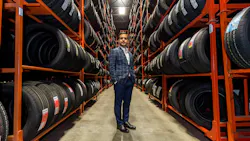
At CanadaWheels and USAWheels, this system-level challenge has influenced how we have developed vehicle-specific search, staggered fitment, aggressive fitment and wheel visualization technologies. CanadaWheels’ technology maps more than 50 million vehicle product fitment applications, reinforcing a simple principle: A visual preference should never override vehicle compatibility.
A visualizer can help someone determine whether a wheel design complements a vehicle, but the underlying fitment technology must establish whether the selected dimensions are compatible with the vehicle's engineering requirements. That distinction matters when a change in wheel size, offset or configuration can affect handling, clearance and overall performance.
How Can Wheel Design Affect Vehicle Performance?
Wheel design can influence vehicle performance through mass, rotational inertia, stiffness, airflow, brake cooling, structural durability and tire integration. The relative importance of each factor depends on the vehicle and its intended use.
Mass and Rotational
A wheel contributes to both unsprung mass and rotating mass. Reducing unsprung mass can help the suspension respond to changes in the road surface, although the overall effect depends on the complete suspension system. Rotational inertia depends not only on total mass but also on where that mass is located.
In simplified terms, material positioned farther from the axis of rotation contributes more strongly to rotational inertia. Two wheels with the same total weight can therefore behave differently if their mass is distributed differently. This is why wheel diameter, barrel construction and spoke design should be evaluated together rather than judged solely by a published weight.
Spoke Geometry, Stiffness and Brake Cooling
Spokes must transfer loads between the rim and hub while maintaining the required stiffness, brake clearance and fatigue resistance. Removing material may reduce mass, but it can also change stress concentrations and deformation under load.
Spoke geometry also influences airflow around the wheel and brakes. More open designs may provide different airflow paths around braking components, while more enclosed designs may be developed to help manage aerodynamic drag. Neither approach is universally superior. Cooling performance and aerodynamic behavior depend on the complete wheel, brake and vehicle configuration.
Diameter, Width and Tire Integration
Wheel and tire dimensions must be considered as a package. Changing wheel diameter without selecting the correct tire can alter overall rolling diameter, speedometer readings, effective gearing, ground clearance and the operation of electronic vehicle control systems.
Width must also match an appropriate tire range. A tire installed on an unsuitable wheel width may not maintain its intended profile or handling characteristics. With staggered fitment, where different wheel or tire sizes are used at the front and rear, the selected combination must preserve suitable rolling diameter relationships, clearance and load capacity. These considerations can become even more important for electric vehicles because their weight, immediate torque delivery and efficiency requirements may place additional demands on wheels and tires.
Structural Performance and Manufacturing
Every wheel must withstand repeated cornering, braking, acceleration, impact and vertical loads. Important considerations include load rating, fatigue life, impact resistance and the ability to maintain dimensional integrity under real operating conditions.
Formula 1 provides an extreme example of how material selection and manufacturing methods work together. F1 wheel rims are made from tightly specified magnesium alloys, and forged magnesium wheels are used because they can combine low mass with the strength and durability required under severe racing loads. Beginning with the 2026 season, BBS Motorsport is supplying Scuderia Ferrari with specially developed forged magnesium racing wheels.
READ MORE: A Quick Byte: Formula E Battery Packs
Formula 1 offers useful insights for road vehicle design, although its wheel specifications and materials are not necessarily appropriate for everyday applications. The right choice depends on how material, manufacturing method, geometry and mass work together, as well as how the finished wheel performs under validation testing.
For road vehicles, casting, flow forming and forging offer different approaches to wheel production. Casting is generally the most accessible method and allows manufacturers to produce a wide range of designs efficiently. Flow forming applies pressure to the barrel of a cast wheel, changing its mechanical characteristics and potentially reducing mass while maintaining the required strength.
Forging shapes a metal blank under significant pressure, producing a refined material structure that can provide high strength with less material. This can allow a properly engineered forged wheel to be lighter than a comparable cast wheel while still meeting its structural requirements. Most forged road wheels use aluminum alloys rather than the specialized magnesium alloys found in F1.
However, the manufacturing method alone does not guarantee that a wheel is appropriate for every application. Engineering quality also depends on the alloy, geometry, heat treatment, manufacturing controls, load rating, validation testing and intended use. Additionally, the objective should not simply be to produce the lightest possible wheel; the design should also make sense from a manufacturing and cost perspective.
What Separates Cosmetic Customization From Engineering-Driven Design?
Cosmetic customization changes how a component looks while preserving its intended operating characteristics. Engineering-driven customization changes one or more parameters that affect how the component functions within the vehicle.
A new color or surface finish is generally a cosmetic change, while altering a wheel’s diameter, width, offset, material, spoke layout or load rating has engineering implications. Finishes also have to meet performance requirements. Coatings must adhere properly; resist corrosion; and withstand temperature changes, road salt, brake dust and other environmental contaminants. A finish that deteriorates prematurely or compromises a wheel’s mounting surfaces can create problems beyond appearance.
Responsible wheel personalization should begin with several questions:
- Is the wheel designed for the vehicle’s load requirements?
- Are its diameter, width and offset compatible with the vehicle?
- Does it provide adequate clearance for the brakes, suspension and bodywork?
- Is the tire appropriate for both the wheel and the vehicle?
- Have structural strength, durability and intended use been considered?
- Could the change affect steering, handling, efficiency or ride quality?
Only after these questions are answered should appearance become the deciding factor.
The Transferable Engineering Lesson From Formula 1
Formula 1 demonstrates that visual identity and engineering performance can coexist, but they do not operate independently. The bodywork establishes the functional architecture and the livery must work within it.
Personalized wheels should follow the same principle. A wheel can dramatically change the appearance and character of a vehicle, but it remains a rotating, load-bearing component connected to several critical systems.
That places some practical limits on how far styling choices can go. Engineers and designers have to account for the wheel’s dimensions, materials and manufacturing process, along with the loads it must carry and its compatibility with the vehicle. When those requirements are built into the design from the outset, personalization can deliver visual distinction without compromising function. The result is a wheel that contributes to the vehicle’s design while doing the job it was engineered to do.
Have a question, comment or idea? Get in touch with the Machine Design editors at [email protected].
About the Author
 Saleh Taebi
Founder and CEO, CanadaWheels and USAWheels
Saleh Taebi is an electrical engineer, technology entrepreneur, and Founder and CEO of CanadaWheels and USAWheels, automotive e-commerce platforms serving drivers across North America. Drawing on his engineering education and extensive experience in research and development centers, he has led the development of technologies for vehicle fitment, wheel visualization, product-data automation and automotive e-commerce.
Related
 How Formula E Rewrote the EV Playbook


Voice Your Opinion!
To join the conversation, and become an exclusive member of Machine Design, create an account today!
 Leaders Logo
Leaders relevant to this article: