8 Common Reasons Causing Gear Failure
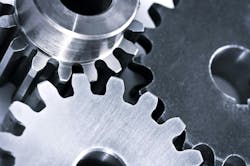
Whether plastic or metal, every kind of gear loses its luster and capabilities in time. Wear and tear erode them in various ways, leading to performance declines. Fortunately, knowing the most prominent threats can help manufacturers, designers and engineers keep them at bay.
What is the most common cause of gear failure? Identify the most likely causes of disruption and degradation in these critical components.
Bending and Contact Fatigue
Gears are experiencing constant pressure on their teeth, especially at the root. Repetitive bending, pitting and spalling eventually cause fractures and divots, with some penetrating throughout the entire mechanism. Some are more prone to this kind of fatigue than others because of their engineering, whether it be unoptimized tooth geometry or poor fillet radii.
Experts can mitigate these occurrences by reinforcing gears with treatments such as shot peening and improving quality control to prevent grinding defects. NASA experts also recommend using the Weibull distribution to determine estimated fatigue life, especially in intensive industries.
Gradual Wear and Tear of Teeth
Fatigue from extended stress and pressure eventually erodes the gear’s surface, but other types of wear and tear occur. Abrasive wear, scoring and corrosive influences can shave down a gear’s material. Naturally occurring debris or lubricant breakdown often leaves the gear vulnerable to chemicals, moisture and other adverse influences.
Research on helical gears in wind power technology demonstrated that hard particles found in oil samples, among other parameters, severely exacerbated gear damage in their early life by as much as 30% more.
Inadequate Lubrication
Lubricant helps keep gears working smoothly in the long term. However, just because it is present does not provide certain longevity. While insufficient amounts of oil and slow flows can cause the gears to dry and strain, the wrong product can also cause damage. Lubricants with harmful additives or incompatible viscosities will also cause failure. Additionally, oils can be contaminated with gear particles and other pollutants. Regular lubricant testing is essential for verifying its integrity.
Manufacturing Defects
Defects happen throughout a gear’s life, from design to operations. It could be exposed to too much heat and become brittle. An improperly calibrated machine could misalign parts and ruin the gear’s teeth or surface. Low-quality materials within the metals can also increase the likelihood of early erosion and defects, such as fractures.
READ MORE: What’s the Difference Between a Metric Gear and an Imperial Gear?
One study examining failed rail gears discovered that insufficient heat treatment and grinding burns were several causes of gear failure. This led to bainite formation, ruining the structure beyond repair.
Gear designers can also supplement its composition with additives, compensating for its inherent characteristics. For example, some gear steels are alloy-based, with additives such as molybdenum or vanadium, to enhance their mechanical performance while maintaining flexibility.
Gear and Bearing Misalignment
Gears frequently bear heavy loads, some of which exceed their intended capacity. Even if the amount is within its parameters, uneven distribution could cause it to misalign and produce irregular wear and tear. Early failure can occur even if only part of the gear is experiencing degradation.
Operators can prevent this from happening to gears and bearings by doing more thorough quality checks during assembly. This will ensure everything is positioned correctly and that the shaft moves in an efficient, productive manner. Scheduling audits of the gearbox housing is also essential, as deformations there could also lead to critical failures.
Improper Installation and Mounting
Even if the gear is perfectly designed and lubricated, the outcome will be incorrect if the installation is flawed. It can potentially cause the most types of failures, making diagnostics more challenging to issue. For example, what appears to be a manufacturing defect from a gear design perspective could actually be an installation error in disguise.
READ MORE: Worm Gear Reducer Efficiency: Ratio, Run-In and Input Speed
If the gear’s teeth are running against the wrong surface or bearings have preload, everything from overheating to misaligned loads can occur. It may also lead to damaged shafts and housings if fluids cannot flow properly or clearances between parts are too small or too wide.
Gear Overloads and Shock
When a gear is burdened with more weight, pressure and stress than it can handle, it will inevitably fail. Engineers design components with a recommended capacity, and while this could be exceeded and still function, it is not advised for extended periods. If plastic is a primary material, the overload and shock will cause this to deform or crack far too early in its life cycle.
Businesses can prevent gear shock by training employees to prevent misuse. However, some overloads are avoidable if there are miscalculations and incorrect estimations of the gear’s strength in the design phase. Additionally, workplaces can mitigate the potential impacts that gears may face by implementing improved workflows and enhanced safety mechanisms.
Fretting Corrosion
In machinery with constant exposure to liquid, humidity and moisture, such as hydraulic trucks, its interlocking and rotex gears need regular surveillance to prevent corrosion as fluid moves between mechanisms. Because the gears are oscillating and repeatedly coming into contact with other surfaces, corrosion can form even more frequently.
READ MORE: Materials Selection in Precision Mechanical Components
Corrosion prevention can happen in myriad ways. Supplementing metals with alloys and additives that improve their corrosion resistance is an option. Treatments and coatings are another satisfactory alternative. Reducing the number of chemicals present in liquids and lubricants can also preserve gears. Exposure to caustic liquids can exacerbate corrosion, particularly in clamped and tight joints and fittings where there is minimal space for moisture to drain away.
The worldwide cost of corrosion is increasing annually. Using corrosion management systems could save between 15% and 35% on control costs annually, equaling up to $875 billion. These savings would come from downtime reductions, fewer machinery replacements and fewer outages.
Eliminate the Primary Causes of Gear Failure
Knowing what the most common cause of gear failure is can encourage designers and operators alike to manage mechanism health more closely. Careful engineering at the planning stage and attentive operational efficiency at a technician level will prolong the life of any part. The collaboration will lead to longer shelf lives for these integral components, making industry work safer and more productive in the long run.
About the Author
 Emily Newton
Emily Newton
Emily Newton is a technology and industrial journalist. She is also the editor in chief of Revolutionized. She has over five years covering stories about warehousing, logistics and distribution.
Voice Your Opinion!
To join the conversation, and become an exclusive member of Machine Design, create an account today!
 Leaders Logo
Leaders relevant to this article: