Do More in Less Space: Ball Splines for Medical Devices
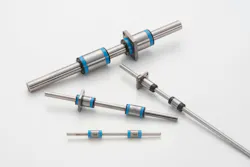
Plenty of medical devices need one shaft to do two jobs at once. A surgical instrument advances along its axis and rolls to orient a tool at the tip. A diagnostic probe descends into a sample vial and spins to mix or aspirate. A beam-shaping element in a radiotherapy head translates into position, then rotates to set an angle. While the motion itself isn’t unusual, what makes it hard is the space it has to happen in.
One common solution is to stack mechanisms. Use a linear guide for the travel, add a separate rotary element for the torque and then couple the two together. While this approach works on a bench, inside a robotic arm, imaging gantry or handheld instrument, it consumes room the design doesn’t have and compounds alignment errors the application can’t tolerate.
Ball splines accomplish both functions onto a single shaft, offering a compelling alternative in devices where every millimeter of envelope is precious.
How a Ball Spline Carries Torque and Travel on One Axis
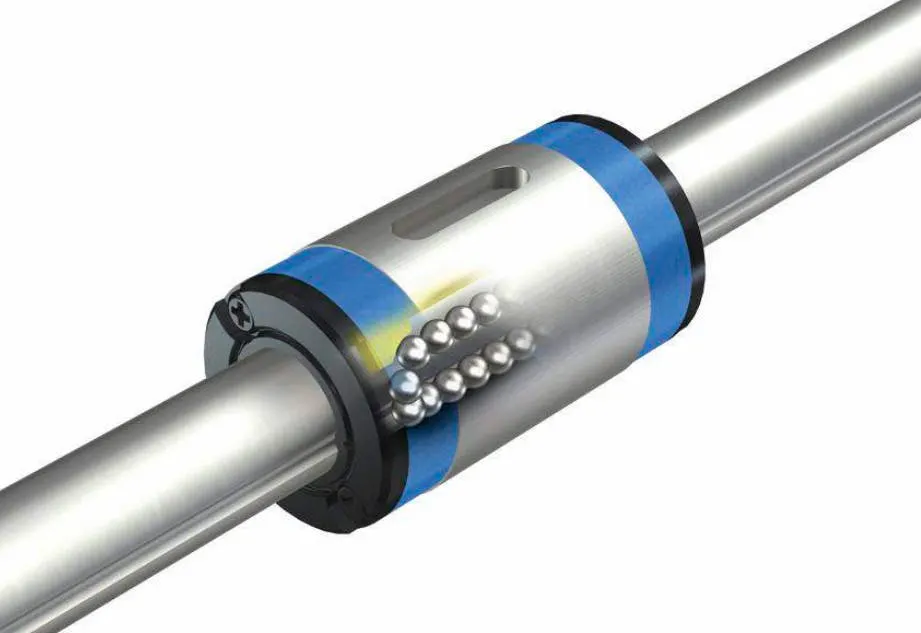
A ball spline pairs a spline shaft with an external cylinder that rides along it. Large recirculating balls run on two raceways and make four-point contact with the spline track groove. As the cylinder translates, the balls roll and the assembly behave like a linear bearing. When torque is applied, those same balls bear against the flanks of the groove and transmit it, so the assembly also behaves like a rotary drive.
READ MORE: Why Ball Splines Matter: The Motion Control Technology Behind Precision Machines
Spreading contact across four points produces a large contact area, distributing the load evenly and limiting elastic deformation as working loads climb. The result is a stiff joint that holds its position rather than winding up under torque. That same contact area also allows the balls to be preloaded. Preload takes up rotational clearance so the shaft and cylinder turn together without losing motion, which matters when a device has to command an angle and trust that the tool got there. It also raises rigidity, at the cost of some added friction, so preload is a specification to tune to the application rather than a value to maximize.
Friction stays low because the balls roll on a recirculating path instead of sliding. Low friction keeps positioning accurate even as breakaway and running resistance vary, and it limits the heat and vibration a sliding contact would produce.
The Properties That Matter in Medical Devices
While stiffness, zero backlash and low friction are nice-to-haves in any bearing, in medical equipment they become critical requirements.
Positioning accuracy is the obvious one. Radiotherapy beam-shaping hardware is held to demanding geometric tolerances, with modern multileaf collimator designs—the moving leaves that shape a treatment beam—evaluated against sub-millimeter positioning accuracy across the leaf bank. Mechanisms that contribute their own backlash or deflection spend part of that error budget before the control system gets a say.
READ MORE: Bearing the Load in Rotary Ball Spline Design
Vibration and noise matter for a different reason. A device operating next to a patient is judged partly on how it sounds and feels. Smooth rolling contact keeps vibration and audible noise down, and a mechanism that generates little heat is easier to place near tissue or sensitive electronics.
Cleanliness is the requirement designers most often underestimate. Rolling elements wear slowly, meaning fewer particles shed into the device. That behavior matters both for equipment assembled or operated in environments classified under ISO 14644-1 and for any instrument where debris migrating toward a sterile field or an optical path is a design risk. Less wear also means longer maintenance intervals, which is its own advantage in equipment that is difficult to open.
Ball splines can be specified further for these environments. Stainless steel shafts suit clean applications and those where rust-prevention oils are not permitted. Surface treatments like chromium plating add corrosion resistance beyond what stainless alone provides.
Where Ball Splines Earn Their Place
Because one shaft performs two functions, ball splines fit a range of medical applications that are otherwise awkward to package:
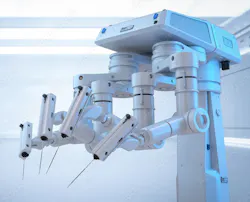
- Surgical robots. A robotic arm must translate its instrument and rotate it at the end effector without backlash. Space for motion components inside the arm is minimal.
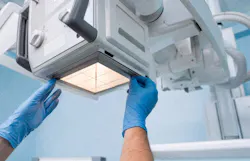
- Radiotherapy. Precise, repeatable motion of beam-shaping and positioning hardware supports accurate dose delivery.
- CT and MRI gantries. Rotating assemblies in imaging equipment frequently need axial adjustment.
- Patient positioning and imaging tables. The recirculating ball arrangement and large contact area support the loads involved in lifting, tilting or rotating a patient.
- Diagnostics and lab automation. Sample-handling instruments repeatedly drive a probe axially into a vessel and rotate it, thousands of cycles per shift.
- Handheld instruments. Surgical and dental tools benefit from the same combination in an even tighter envelope.
How Ball Splines Compare with the Alternatives
A ball spline is not always the first mechanism a designer considers. Here is how it stacks up against the usual candidates.
Keyed shafts. While a keyed shaft transmits torque and allows axial travel, it does so through direct sliding contact between key and keyway at a much higher friction coefficient than recirculating balls and with faster wear. It also requires operating clearance, which shows up as rotational backlash and radial play. A preloaded ball spline has neither.
Linear guide plus rotary coupling. Two subsystems mean two envelopes, plus the coupling and the alignment work to join them. Any residual misalignment or compliance in that stack degrades stiffness and precision. A ball spline puts the combined motion on one axis in one assembly.
Plain bushings. A bushing sliding on a shaft carries considerably less load than a comparably sized ball spline, and sliding friction exceeds rolling friction. Expect higher friction, rougher motion, faster wear and shorter service life.
Timing belts and lead screws. Both require a separate axis to produce the motion a ball spline delivers in one assembly. Belts add their own problems like stretch, tensioning requirements and particle generation as rubber and polymer compounds degrade. Lead screws are a further step removed, converting rotation into travel rather than carrying the two motions independently, so position and angle cannot be commanded separately on one axis.
Design Flexibility Without a Redesign
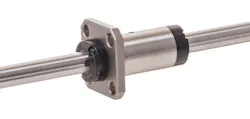
IKO’s MAG and LSAG series use a four-point-contact, double-row raceway design intended to maintain accuracy and rigidity under fluctuating and complex loads. Both offer interchangeable external cylinders and shafts. Interchangeable specifications support high traveling-accuracy requirements, while preloaded cylinders and slide units further raise rigidity.
A ball-retaining mechanism makes the design straightforward to downsize; the LSAG series reaches shaft diameters as small as 2 mm with a 6-mm external cylinder outside diameter (OD). Longer cylinders raise load capacity while holding the same OD, which is useful when a load estimate grows late in development and the envelope cannot. Multiple sectional shapes and lengths give engineers flexibility when developing systems, especially when load requirements or packaging constraints change late in the design process.
Optimize Machine Performance and Patient Care
Combining linear travel and torque transmission in an advanced medical device is a packaging problem before it is a precision problem. Every mechanism added to bridge the gap between linear and rotary motion consumes space, adds joints and spends error budget.
A ball spline avoids the trade-offs by doing both jobs on one axis, in one assembly and with the rigidity and near-zero backlash the application requires. From surgical robots to diagnostic instruments and patient positioning systems, that combination is what makes ball splines worth evaluating early.
Smart Maintenance in Clean Applications
Like any rolling system, a ball spline needs lubrication. In medical equipment, that requirement collides with reality: The mechanism sits in a tight space, the access point is hard to reach and the equipment has no scheduled downtime to spare.
One approach to reducing maintenance requirements is to integrate lubrication directly into the ball spline assembly. In IKO's C-Lube Linear Ball Spline MAG, a porous resin element impregnated with lubricant supplies oil to the recirculating balls through capillary action, helping maintain a lubricating film during operation. According to IKO specifications, the integrated lubrication system is designed to support maintenance-free operation for up to 20,000 km of travel under specified operating conditions.
Paired with a stainless-steel shaft, end plate options and a miniature footprint, the built-in lubrication makes the series a practical choice for clean environments and for applications where opening the device for service is not possible. Eliminating relubrication also removes an oil supply mechanism from the design, lowering total system cost.
About the Author
Yugi Ikeuchi
GM, Engineering & App Development, IKO International
Voice Your Opinion!
To join the conversation, and become an exclusive member of Machine Design, create an account today!
 Leaders Logo
Leaders relevant to this article: