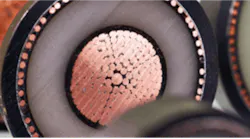
Thermoplastic polyolefin (TPO) technology combines electrical performance, thermal capability, recyclability and manufacturing efficiency to support the next generation of power transmission and distribution networks.
Energy transmission and digitalization are driving significant investments in the development of wire and cable technologies. These large-scale infrastructure developments require unique solutions to help bring power and data where it needs to go in a safe and efficient way. Wire and cable producers are continuously evaluating the material choices that help them achieve their unique goals in an ever-changing technological, regulatory and macro-economic environment.
Innovation to meet emerging needs
Electrical grid expansion driven by renewable energy integration, upgrades in underground transmission, AI-driven data center growth and increasing electrification are driving cable manufacturers to find high-performance insulation materials solutions that can improve manufacturing efficiency.
For decades, crosslinked polyethylene (XLPE) has been the dominant insulation technology for energy cable producers. As companies begin to innovate, with the hope of creating more effective insulating and jacketing materials, thermoplastic polypropylene (PP) and TPO materials are increasingly being adopted as advanced alternatives, particularly in high-voltage DC and medium-voltage AC cable systems.
Among these new material solutions, TPO technology offers a unique combination of polypropylene's thermal performance and the flexibility traditionally associated with rubber-modified systems.
High-performance insulators enabled by LyondellBasell (LYB) Catalloy technology
At LYB, we are creating a PP/Ethylene Propylene Rubber (EPR) alloy directly during polymerization using our proprietary Catalloy technology. This process creates an exceptionally fine and uniform rubber dispersion that enhances flexibility, strength, low-temperature performance, creep resistance, flexibility, puncture and tear resistance, as well as dimensional stability.
Making the switch: what to consider when choosing PP and/or TPO in place of XLPE in power cable applications
TPO materials offer several advantages for manufacturers in wire and cable applications:
● Similar or superior electrical properties: According to the Laboratory of Innovative Materials for Electrical Systems at the University of Bologna, TPO materials exhibit electrical properties comparable to or better than XLPE, including high dielectric strength, low dielectric losses, excellent volume resistivity and minimal space-charge accumulation. Unlike XLPE, thermoplastic TPO insulation does not contain crosslinking byproducts that can contribute to electrical performance limitations.
● Tested for high temperatures: TPO materials developed using Catalloy also enable higher cable operating temperatures (up to 110ºC), improving ampacity and power transmission capability.
● Maximized power transmission efficiency: Industry assessments presented by major cable manufacturers indicate that TPO-insulated cables can deliver greater power-carrying capability compared with conventional XLPE designs while maintaining comparable service life.
● Simplification of production: From a manufacturing perspective, thermoplastic insulation offers significant advantages. Because no curing or degassing stages are required, cable producers can simplify processing, reduce energy consumption, increase line productivity and shorten production lead times. The materials also allow effective melt filtration and eliminate concerns related to premature crosslinking.
● Ready for recycling: TPO insulation also aligns with growing industry demand for circularity. Unlike XLPE, which cannot be readily remelted, thermoplastic PP and TPO materials can be mechanically recycled where appropriate recycling infrastructure exists and potentially reused in future applications. This can provide cable producers with additional options to reduce waste and support circularity ambitions.
● Reduced manufacturing energy use: Unlike XLPE production, PP/TPO cable processing does not require peroxide curing or a subsequent degassing stage. Eliminating these process steps may reduce energy use during cable manufacturing, depending on production conditions
TPO solutions for medium voltage insulation
At LYB, we’ve developed a grade of Hifax, a thermoplastic polyolefin produced using the proprietary Catalloy technology process, designed for use in MV power cable insulations. It exhibits low stiffness, low hardness with a high melting point and low fluidity and contains a robust additive package for thermal stabilization.
In collaboration with Premix and Maillefer, LYB has developed a robust, compatible PP-based solution for MV cable insulation and semiconductive screens, providing a high-performance alternative to traditional XLPE systems.
This solution offers key benefits for power cable manufacturers looking to future-proof their production:
● Fully compatible PP insulation and semiconductive system
● Fast processing and easy handling — no crosslinking required
● Versatile end-of-life downcycling options help support your circular economy targets
● Stable processing and performance in challenging environments
Together, we are setting a new standard for PP-based power cable systems, enabling tomorrow’s energy infrastructure with smarter and more scalable materials.
Improve supply efficiency and meet sustainability ambitions with innovative solutions
As utilities and cable manufacturers seek materials that improve grid reliability, simplify production and support sustainability goals, TPO technologies such Hifax made with proprietary Catalloy technology represent an important step toward the next generation of power cable insulation.
Ready to elevate your wire and cable solutions with LYB proven polyolefin solutions?
Contact our technical experts today or visit lyondellbasell.com to explore our full portfolio, request a sample, or download our technical datasheets.