Q&A: How Integrated Mechatronics is Reshaping Actuator and Motion System Design
Key Highlights
- Effective motion design now requires collaboration across mechanical, electrical and control engineering disciplines from the project's outset.
- Replacing hydraulic cylinders with electric actuators involves system redesign, considering size, cost and full lifecycle expenses rather than a simple swap.
- Closed-loop force control is reshaping actuator and system design, demanding early planning for force requirements and environmental factors.

Enjoying Machine Design’s Motion Control content? Be sure to check out the rest of our Takeover Week coverage here.
Too often, engineering projects still begin with a strictly mechanical focus. But if you ask Mason Cousins, motion design has moved past the approach where engineers choose mechanical parts or tune control loops.
First off, performance doesn’t come from a single element. When controls engineers are brought in after major decisions have been locked in, design teams can expect a string of rework issues ranging from bandwidth limitations and feedback issues to cable routing constraints and compliance, explains the controls engineer who builds mechatronic solutions and subsystems at Tolomatic.
Optimal performance, he maintains, emerges when mechanical, control and electrical work together and, moreover, cross-disciplinary collaboration is becoming a core design requirement.
Shift Toward Pre‑Engineered, Integrated Mechatronic Subsystems
John Fenske, who is responsible for communications and driving product roadmaps and product development at Tolomatic, concurs. From where he stands, linear actuators are evolving from simple mechanical components to mechatronic subsystems that include sensors, stiffness optimization and electronics.
Industries constrained by space and weight, such as mobile equipment, are pushing this shift forward, Fenske said. Their subsystems must integrate smoothly into available control architectures, which in turn require thoughtful system-level design.
“In terms of what that means for us, it means stretching our wings a little bit,” said Fenske.
Given Tolomatic’s focus as a manufacturer of electric linear actuators and motion control solutions, Fenske said the priority is to consider the full system when guiding customers toward performance gains. “We’re not a controls manufacturer, but we definitely know we have to fit,” he noted.
The following edited Q&A distills core themes Cousins and Fenske say are driving change across linear motion systems.
Machine Design: Where does real performance in modern servo systems come from today? Is it the control, the mechanical design or something else?
Mason Cousins: I’d say it’s an integration between the two. It’s kind of in the name. It’s an entire system that we’re working with. I think when we look at automation, building machines, whatever it may be, we have to make sure that we’re looking at it from an entire system’s point of view. It’s not just the controls and the control algorithms that are running, and it’s not just the mechanical aspects of it.
That’s a part that gets missed commonly early on in the design of systems. A lot of times, there’s heavy focus purely on the mechanical side of things. And while that may help make sure that an actuator fits into a system, and it can produce the force or do the speed that it needs, that doesn’t tell the whole story, and it may lead to problems down the road for controls engineers, electrical engineers, as they try to take some system that’s already been developed and fit it into whatever it is that they’re trying to do.
The biggest thing is making sure everyone is at the table. When everyone’s talking initially, make sure they can voice their concerns, what they’re interested in, and everyone works together to help try to build an optimized system, instead of just throwing it to one side of the engineering team once the other side is done with it.
READ MORE: Understanding Servo Linear Actuator Systems
John Fenske: The first question shouldn’t be, “What force or speed do you need?” It should be, “What are you trying to accomplish?” Understanding the bigger goal enables you to create the right electromechanical solution rather than just a parts list. You’ve got to broadly understand what the customer is trying to accomplish in order to get to a workable solution. We see that really come to bear. What’s driving our business, largely, is hydraulic conversion. In hydraulic and pneumatic conversion, there’s a lot of electrification going on.
MD: When companies replace hydraulic or pneumatic cylinders with electric actuators, what misconceptions do they commonly face?
MC: One thing that we see commonly is, when they’re doing that conversion, and it comes back to what we were just talking about—not having the controls and electrical team involved at the beginning. They may, if this is their first jump into it and they’re not familiar with servo systems or electric systems of some kind, they may not understand the complexity that’s involved with getting that system set up and doing exactly what they want, as they were before with pneumatic or hydraulic. And that’s not to say that electric systems are overly complex by any means. It’s just different.
So, there are different considerations that you need to take into account when you design a system. Another one that comes to mind is the physical size, especially when you’re looking at the hydraulic world. Consider a hydraulic cylinder—hydraulics are incredibly power dense. If you’re going to take a direct replacement with an electric actuator, it is probably physically going to be a bit bigger if you’re looking at the same forces.
Another one is sticker shock. The upfront cost of electric systems is likely going to cost more. People need to make sure that when they’re looking at moving into an electric system, are they taking the full picture into account when it comes to cost as well?
It’s not just the upfront, it’s the maintenance cost. It is the cost of not only maintaining the equipment for the air compressors or the hydraulic motors that are running the HPUs, but it is also, how much electricity are those drawing? There are a lot of different things to take into consideration when you’re moving from hydraulics to pneumatics over to electric. It’s not just the surface‑level stuff that comes up.
JF: The biggest misconception is that a hydraulic cylinder can be swapped one‑for‑one with an electric actuator. In reality, it is a system redesign opportunity. Rather than limping along, progressive customers use electrification to optimize performance.
MD: How is closed‑loop force control changing actuator and system design, especially for force‑critical tasks such as pressing, clamping or forming?
MC: This is something that we run into quite a bit. And this ties back to looking at it from a system level from the beginning. So, at the onset, if force control is something that’s very important for whatever the application may be—pressing, clamping, welding, whatever it is—has that been thought of at the very beginning when you’re designing it? Or is it an afterthought? Maybe we need to clearly define the force requirements.
In that case, you’re trying to throw a load cell into the system where it wasn’t designed originally. Will it fit? At times, even something as simple as cable routing is a big concern because it wasn’t thought of at the beginning of the design phase. So that can provide challenges.
There are also environmental challenges with load cells—is it in an environment that’s going to be incredibly hot? Are thermals going to come into consideration? If it’s going to be exposed externally, mounted to the end of the actuator, the end of the tooling or below the tooling, that may come into consideration.
READ MORE: Comparing Electric and Fluid-Power Actuators
Tolomatic does have products that have load cells integrated inside of them, and so that eliminates a lot of those problems. You don’t have to worry about cable routing, the environmental aspects. And [the design also accounts for] actuators that heat up during operation, so they don’t adversely impact the measurements that you’re getting when you’re measuring force.
And I think also it comes down to the actuator selection. When you’re looking at doing closed-loop force control, some actuators are designed to operate better in that space than others. There’s less compliance in the system, because it's a stack-up of all the [mechanical] parts in the system as you’re pressing. So, if you have compliance in any of those different aspects, that’s going to be a potential error in your system.
There are actuator designs that have been thought of from the beginning to incorporate accurate load cells. The systems are very stiff from the actuator’s point of view, and then it comes back to communicating in the early stages of design: Are we selecting the right actuator for this system? And then, what is that attached to? Is the tooling set up properly? Is there too much compliance? And what does the actual end effect look like? Is that set up properly?
A couple of other points are actually reading the load cell when you’re doing that. Is your amping signal able to provide large enough bandwidth? Whatever you’re feeding that signal into—likely a PLC, which is doing some conversions on it and then sending the command over to a drive—is that able to read that fast enough? It depends on the application. Do we need really high-speed readings of force, or is that not necessarily as big of a requirement? We may want to know what the force was after we made a move.
Those are things to keep in mind. And again, it comes back to talking this through from the very beginning from all different sides—the controls, electrical and the mechanical—to make sure that all the different components that are selected, and then the entire design of the system, is set up properly for whatever the application may need.
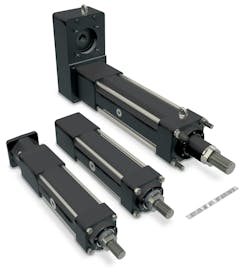
MD: Are linear actuators becoming full mechatronic subsystems rather than simple mechanical components?
JF: The architecture of the mechatronic subsystem for us really falls into two categories. We think about two categories of customer: devices and equipment (and think about mobile) vs. factory floor (think about factory automation). The limitations around space and weight are a lot different when you think about devices, equipment and mobile, versus factory floor, where you might not have some of those limitations around space and weight.
Certainly, mechatronic subsystems are becoming more popular. But it is probably more popular in the devices and equipment and we see it a little bit more intense in that segment of the market, rather than factory floor, where you’ve got a few more options in how you can lay out your architecture. So, where the architecture needs to be tight, needs to be compact, has limitations on space and weight, you’re definitely thinking about a mechatronic subsystem and optimizing that subsystem.
In terms of what that means for us, it means stretching our wings a little bit. We’re not a controls manufacturer, but we definitely know we have to fit. We want our customers to select the best controls; we want our customers to select the best actuator. And we design our actuators to make sure that they fit into that architecture really, really well.
So that’s the way we behave—making sure we understand the big picture, first of all, making sure we understand how we fit, and making sure the customer knows how to optimize the performance based upon those parameters.
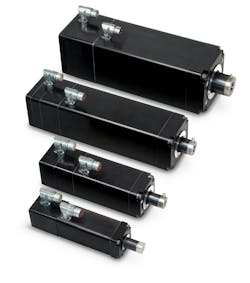
MD: When all is said and done, is motion intelligence moving into the axis itself, or remaining in the controller? In other words, how much automation—through sensing, diagnostics and optimization—do you expect to migrate into the actuator?
JF: Yes, so force sensing and positioning sensing [are already in place], and would be making actuators more intelligent. The diagnostics piece is really interesting as well, and I think lots of people are experimenting with that. I think it’s a little bit immature yet.
Looking at temperature and vibration and understanding what the impact or what that data means for actuator life and actuator performance is really important, and it varies by actuator. There's some magic there in making sure you understand what those inputs are and what they mean for actuator life and performance.
READ MORE: An Engineer’s Primer on the Actuator Component
So yes, we definitely see that the axis is becoming a smart axis, right, rather than just a motion device. Back to the diagnostics piece, it’s really interesting, right? We’re looking at a lot of that. In the end, our customers’ maintenance workflows need to be aligned with that, right? Today, we’ve got a lot of folks that don’t maintain actuators. Their maintenance flow is a little bit different. They may focus on replacement rather than maintenance. And do something different.
And then there’s data architecture. We talked about force sensing earlier. There are two types of people in the market. Those who are gathering the data and using it post-mortem to understand what’s happening in their system. And then there are those who are using it for real closed-loop control. And those are two different things.
But getting it into the axis is the common denominator, for sure, and understanding more about the axis—whether it’s force, position or temperature, or vibration—all of those things are making linear actuators more intelligent, for sure.
About the Author
 Rehana Begg
Rehana Begg
Editor-in-Chief, Machine Design
As Machine Design’s content lead, Rehana Begg is tasked with elevating the voice of the design and multi-disciplinary engineer in the face of digital transformation and engineering innovation. Begg has more than 24 years of editorial experience and has spent the past decade in the trenches of industrial manufacturing, focusing on new technologies, manufacturing innovation and business. Her B2B career has taken her from corporate boardrooms to plant floors and underground mining stopes, covering everything from automation & IIoT, robotics, mechanical design and additive manufacturing to plant operations, maintenance, reliability and continuous improvement. Begg holds an MBA, a Master of Journalism degree, and a BA (Hons.) in Political Science. She is committed to lifelong learning and feeds her passion for innovation in publishing, transparent science and clear communication by attending relevant conferences and seminars/workshops.
Follow Rehana Begg via the following social media handles:
LinkedIn: @rehanabegg and @MachineDesign
YouTube: @MachineDesign-EBM
Voice Your Opinion!
To join the conversation, and become an exclusive member of Machine Design, create an account today!
 Leaders Logo
Leaders relevant to this article: