MD&M West 2026 Booth Briefing—Silver-Based Materials for High-Precision, Minimally Invasive MedTech
Key Highlights:
- Tanaka's Visi Fine portfolio features materials designed for high visibility under X-ray imaging and resistance to oxidation, ideal for minimally invasive medical devices.
- Silver's industrial demand and price fluctuations influence material selection, prompting manufacturers to adopt recycling and alternative sourcing strategies to manage costs.
- Material substitution in medical devices is approached cautiously, prioritizing reliability and regulatory compliance, especially for internal or implantable components.
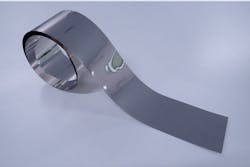
Tanaka Precious Metal Technologies, a global manufacturer of precious metal materials, will present its Visi Fine portfolio at MD&M West 2026. The product lineup of highly radiopaque (dense enough to block X-rays) precious metal materials and other precious metal-based materials are engineered for medical device components.
The company uses advanced processing methods, such as specialized melting, ultra-fine wire manufacturing and laser processing, to develop materials made from dense metals such as gold and platinum. These materials are designed to show up clearly on medical scans and resist rust and damage, making them suitable for small, precise tools used in minimally invasive procedures.
In addition to gold and platinum, silver can be incorporated into precious metal-based materials used in medical device components. The engineered materials offer strong radiopacity (so they show up clearly under X‑ray imaging) along with resistance to oxidation and corrosion, making them suitable for high-precision, minimally invasive medical devices, notes a company press release.
Silver’s expansion into clean energy, electronics and strategic reserves, has increasingly aligned it with precious metals, with significant industrial use in photovoltaic, electronics and medical applications.
Below, Natalie Abe, a spokesperson for Tanaka, offers insights on the price swings of silver over the course of the past few years, citing demand across industrial and investment sectors.
Editor’s Note: This Q&A is part of a series, Machine Design’s “Booth Briefings—SME Insights Shaping MedTech’s Future.” Conversations are centered on and sourced from MD&M West 2026, held at the Anaheim Convention Center in Anaheim, Calif. (Feb. 3-5, 2026).
Check out our full series of MD&M West 2026 Booth Briefings:
Q: Silver’s reclassification as a precious metal has driven significant price volatility. How is this reshaping material selection, cost modeling and supplier relationships for MedTech device manufacturers that rely on silver for conductivity, coatings or antimicrobial performance?

A: While some impact from rising silver prices can be anticipated, it is necessary to carefully monitor price trends. Since 2024, silver prices have shown a gradual upward trend, with a more pronounced increase in the second half of 2025. This has been attributed in part to diversification of investment following the surge in gold prices; however, from an industrial perspective, a calm assessment is required to determine whether this represents a temporary movement or a long-term trend.
As the development of functional materials requires time, it is expected that, for the near term, a wait-and-see approach will continue without being overly influenced by short-term price fluctuations.
Q: With tariffs and precious-metal costs continuing to rise, what tradeoffs are manufacturers making between redesigning components, absorbing costs or pursuing alternative sourcing strategies. Where do you see the biggest risk to device reliability or regulatory compliance?
A: There has been a succession of reports concerning policy changes, making it difficult to present a definitive view at this stage. At the same time, against the backdrop of rising precious metal prices, initiatives such as minimizing material loss in manufacturing processes and thoroughly recycling scrap materials are expected to become more important than ever. These efforts are fundamental practices for manufacturers to minimize the cost impact on customers and will intensify further going forward.
In addition, there may be a growing trend toward more clearly requiring “functions that can only be achieved with precious metals,” which may result in precious metals being less frequently selected for general-purpose applications.
Nevertheless, high reliability is a major strength of precious metals as functional materials, and it is expected that they will continue to maintain a certain role even amid rising prices. When viewed by application, precious metal materials used in inspection equipment and external devices may be more actively considered for substitution with alternative materials than those used in implant materials or surgical devices intended for use inside the body.
In medical products, reliability and regulatory compliance are important prerequisites, and movements to advance material substitution by treating these factors as trade-offs are being approached with caution across the industry.
Q: Recycling precious metals from medical devices is gaining traction, but reuse is often limited to one or two cycles. What are the biggest technical barriers to recovering and refining these materials while still meeting medical-grade performance and validation requirements?
A: Reuse of medical devices is limited to one or two cycles, after which they are directed to recycling. The process of recycling—which means recovering and refining precious metals from end-of-use products into high-purity precious metals—is based on established recycling technologies used across industrial applications, and once materials are introduced into appropriate recycling processes, no fundamental technical barriers have been identified at this stage.
About the Author
 Rehana Begg
Rehana Begg
Editor-in-Chief, Machine Design
As Machine Design’s content lead, Rehana Begg is tasked with elevating the voice of the design and multi-disciplinary engineer in the face of digital transformation and engineering innovation. Begg has more than 24 years of editorial experience and has spent the past decade in the trenches of industrial manufacturing, focusing on new technologies, manufacturing innovation and business. Her B2B career has taken her from corporate boardrooms to plant floors and underground mining stopes, covering everything from automation & IIoT, robotics, mechanical design and additive manufacturing to plant operations, maintenance, reliability and continuous improvement. Begg holds an MBA, a Master of Journalism degree, and a BA (Hons.) in Political Science. She is committed to lifelong learning and feeds her passion for innovation in publishing, transparent science and clear communication by attending relevant conferences and seminars/workshops.
Follow Rehana Begg via the following social media handles:
LinkedIn: @rehanabegg and @MachineDesign
YouTube: @MachineDesign-EBM
Voice Your Opinion!
To join the conversation, and become an exclusive member of Machine Design, create an account today!
 Leaders Logo
Leaders relevant to this article: