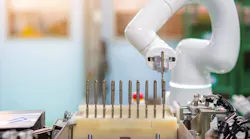
Take a guided tour of the igus booth to explore motion plastics, humanoid robotics, cleanroom energy supply, PTFE-free bearings and autonomous mobile robots (AMRs) for manufacturing...
As new U.S. restrictions accelerate demand for domestically built humanoids, AMRs and autonomous systems, mechanical engineers face mounting pressure to improve through innovations...
AI excels at generating designs, but the physical realities of motion, variation and manufacturing continue to expose its limits. Santosh Ramjanam Yadav explains why.
A look at six questions engineers and engineering managers can ask to identify suitable robotics applications, assess existing plant infrastructure and determine how best to integrate...
Cobots may lower barriers to automation, but they don't eliminate the engineering decisions that determine whether a deployment succeeds, according to FANUC's Jerry Perez.
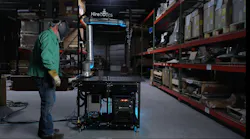
Hirebotics CEO Matt Bush breaks down what Robotics-as-a-Service could mean for the next generation of industrial robots, and why the forces reshaping the industry are changing...
AI doesn't create risk when it makes a recommendation—it creates risk when that recommendation becomes physical motion. This article introduces the Actuation Boundary, an engineering...
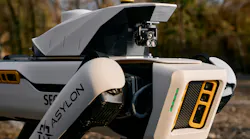
How Asylon engineers integrated drones, quadruped robots, sensors and AI to automate military aircraft inspections while overcoming challenges in payload design, motion stability...
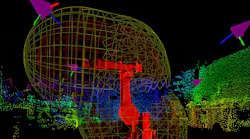
Inbolt aims to bridge the gap between robot simulation and production with runtime vision that adapts CAD-derived trajectories in real time. RoboDK, by contrast, focuses on streamlining...
Robotics industry leaders discuss robotic integration pitfalls, the regulatory shift from cobot to collaborative application and the practical implications of physical AI.